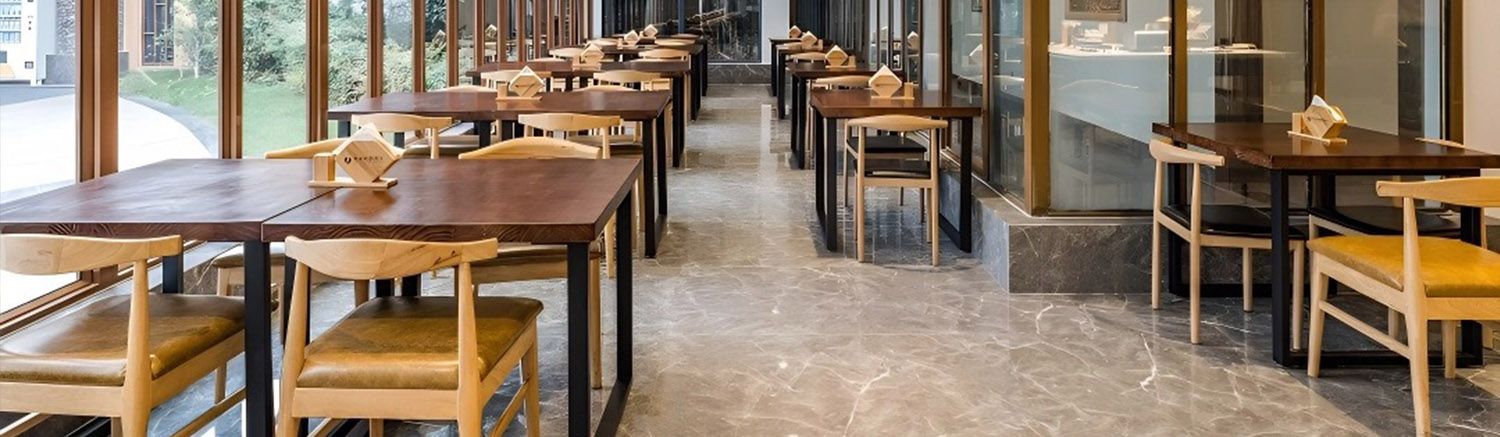
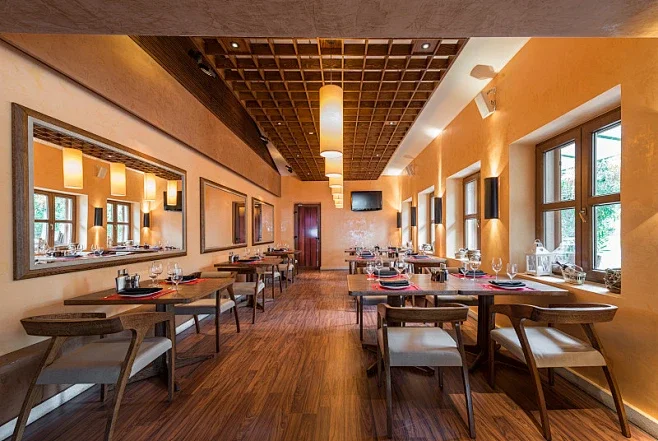
Selecting the right dining chairs can directly affect a restaurant’s bottom line. During procurement and project planning, store owners and interior designers often focus solely on the aesthetics or price of dining chairs, overlooking the critical role dining chairs play as invisible operational managers.
Different restaurant concepts require entirely different guest dwell times:
Understanding the ergonomics and material details of dining chair selection is essential for balancing space efficiency and guest experience.
In fast-casual and quick-service settings, metal dining chairs (such as aluminum frame chairs and powder-coated steel chairs) are a top choice due to their exceptional durability and easy maintenance.
Fast-food dining chairs typically perform best with a backrest angle of 95° to 100° (more upright) and a seat depth of 40–42 cm. This geometry helps guests maintain a proper dining posture, focus on their meal, and minimize prolonged lingering after finishing.
For upscale dining, Western restaurants, Japanese eateries, and lounges, solid wood dining chairs and upholstered dining chairs elevate interior quality and extend guest dwell time comfortably.
Slow-dining solid wood chairs generally feature a backrest angle of 105° to 110° and a wider seat depth of 45–48 cm, often paired with ergonomic armrests to support the lower back and arms during extended meals.
| Feature / Metric | Fast Casual / Quick Serve (Turnover Focused) | Fine Dining / Lounges (Ticket Size Focused) |
|---|---|---|
| Recommended Chairs | Metal Dining Chairs / Thin-Padded Metal Chairs | Solid Wood Dining Chairs / Armchair Upholstered |
| Operational Goal | Maximize turnover, easy maintenance, durability | Extend dwell time, enhance guest comfort, elevate ambiance |
| Chair Back Angle | 95° – 100° (Upright position) | 105° – 110° (Relaxed position) |
| Seat Dimensions | Shallow depth (40-42cm), thin cushioning | Deep seat (45-48cm), thick high-resilience cushioning |
| Maintenance Needs | Extremely high (Waterproof, oil-proof, stain-resistant) | Medium-High (Periodic leather care / fabric protection) |
| Durability Focus | Reinforced joints, scratch-resistant metal frames | Heavy weight capacity (150kg+ static load rating) |
Answer: Completely unpadded hard dining chairs are generally not recommended. Excessive hardness can cause discomfort within the first few minutes and negatively impact the guest’s perception of food quality. Using metal dining chairs with thin upholstered cushions provides a better balance between comfort and turnover.
Answer: Consider metal wood-grain dining chairs. These chairs utilize a metal inner frame finished with a realistic wood grain surface, delivering the visual warmth of solid wood dining chairs alongside metal durability at a more accessible cost.
Answer: Focus on three main areas: ① Stability and weight capacity tests (each dining chair should support at least 150 kg static load); ② Durable floor glides (to protect flooring and reduce noise); ③ Environmental & odor controls (ensuring glues and finishes comply with commercial standards to prevent odors at grand opening).
Selecting the right dining chairs goes beyond aesthetics—it directly influences daily operational efficiency and guest satisfaction. As a specialized commercial restaurant furniture manufacturer, KONMA provides custom manufacturing and production support for global restaurant chains, hospitality brands, and commercial projects. From metal dining chairs and solid wood dining chairs to custom booth seating, KONMA delivers tailored furniture solutions aligned with commercial operational goals.
Restaurant Furniture is the core competitiveness of res […]
Operational managers of chain dining brands always stru […]
If you own a restaurant, you know the truth. Furniture […]
In 2026, outdoor leisure areas of hotels and rooftop ba […]
Related links:
About us Company News Industry Dynamics Table Chair Outdoor-furniture Sofa Latest dining chair Other SSL 100% Secure Transactions