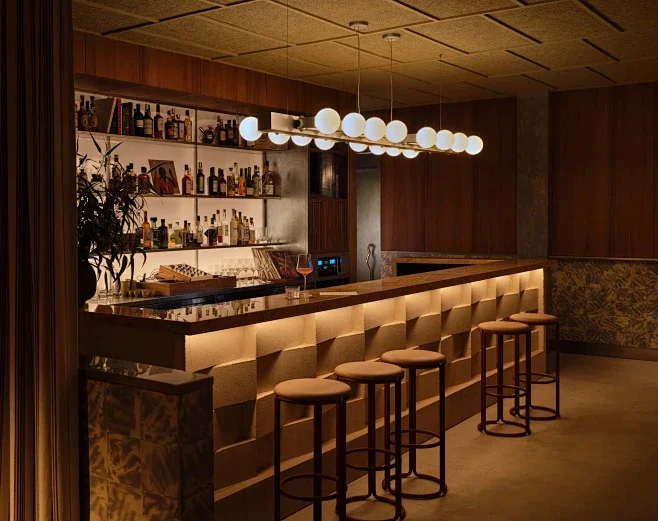
In commercial spaces like bars, boutique cafes, upscale restaurants, or hotel lounges, a bar stool is never just “a seat”—it is a hidden multiplier for floor yield and average guest spending.
A wobbly footrest, peeling leather after a single month of use, or an awkward seat height ratio can destroy a customer’s impression of an otherwise luxury venue within 15 minutes. As a B2B commercial furniture manufacturer, KONMA has witnessed too many costly mistakes: venue operators choosing residential-grade bar stools only to face constant maintenance, chipped paint, or complete replacements less than six months after grand opening.
How do you select the ideal bar stool that balances aesthetics, ergonomic comfort, and heavy-duty commercial durability? This guide breaks down height calculations, material durability arrays, anti-wobble engineering, and essential procurement FAQs.
Seating design in commercial venues is a delicate balance between psychology and ergonomics: you must keep guests comfortable enough to order another round without making them so reclined that it hurts high-traffic table turnover. When specifying ergonomic bar stools, focus on these three core metrics:
Commercial bar areas endure hundreds of friction cycles, heavy weight impacts, and acidic cocktail spills daily. Choosing durable bar stool materials is critical to lowering your 3-year Total Cost of Ownership (TCO):
| Material Combination | Ideal Commercial Setting | Scratch & Stain Rating | 3-Year Maintenance Cost | KONMA Engineering Recommendation |
| PVD Titanium Stainless Steel + Microfiber Leather | High-End Bars, 5-Star Hotel Lounges | ★★★★★ (Ultimate Scratch Protection) | Near $0 | Frame will never rust or chip; choose heavy-duty microfiber leather rated for 100,000+ Martindale rub cycles. |
| Powder-Coated Metal + Water/Stain-Proof Fabric | Modern Bistro, Boutique Cafes | ★★★★☆ (High Stain Resistance) | Low | Steel tubing requires anti-rust primer coat; fabrics must feature 3-proof (water, oil, stain) nano-coatings. |
| Bentwood / Solid Wood + PU / Velvet | Vintage Pubs, High-End Speakeasies | ★★★☆☆ (Prone to Denting) | Moderate | Wooden bases require internal steel frames or metal dowels to prevent mortise-and-tenon joints from shaking loose. |
| Aluminum Alloy / Heavy-Duty PP | Outdoor Rooftop Bars, Beach Lounges | ★★★★☆ (High Weatherability) | Extremely Low | Must incorporate anti-UV additives to prevent sun fading and material embrittlement over time. |
Many residential-grade bar stools fail within three months in a commercial environment because their structural engineering cannot handle dynamic commercial loads.
Residential chairs often use simple bolt-through fasteners that loosen under repeated foot pressures. KONMA commercial bar stools feature full-penetration welded joints or embedded steel mortise structures, reinforced with triangular gussets between the footrest and legs to guarantee stability under 150 kg dynamic loads.
Commercial floors—whether marble, polished concrete, or hardwood—are expensive to repair. Commercial bar stools must feature heavy-duty nylon or anti-slip rubber glides that accommodate minor floor unevenness while eliminating harsh scraping noises and surface scratches.
As a specialized custom bar stool factory, KONMA supports complete B2B customization: from tube wall thickness (standardized at $\ge$ 2.0 mm for commercial projects) and exact frame color matching (RAL/Pantone) to custom upholstery embroidery, ensuring 100% alignment with designer specifications.
Answer: Use the golden formula: Bar Counter Height – 30 cm = Bar Stool Seat Height.
- Standard Commercial High Bar (105–110 cm height) $\rightarrow$ Pair with 75–80 cm seat height tall bar stools.
- Low Counter / Kitchen Island (90–95 cm height) $\rightarrow$ Pair with 65–70 cm seat height counter-height bar stools.
Answer: We strongly recommend Microfiber Leather or Silicone Leather. These offer the luxurious feel of genuine leather while providing resistance to water, alcohol, acidic juices, and cigarette burns, alongside ultra-high tear strength. They are effortlessly cleaned with a damp cloth. If fabric is required by design, specify heavy-duty commercial textiles with nano-stain-repellent treatments.
Answer: This typically stems from thin-wall steel tubing (wall thickness < 1.2 mm), standard residential powder coating, and a lack of footrest reinforcement. A proper bar stool procurement guide should specify: $\ge$ 2.0 mm wall thickness stainless steel/heavy steel, PVD coating or industrial-grade anti-corrosion primer, and triangular welded joints.
Investing in the right bar stool is more than an aesthetic upgrade—it is a strategic decision that reduces long-term operational costs and elevates the guest experience. From ergonomic height calculations to heavy-duty material selection, every detail directly impacts your commercial ROI.
KONMA specializes in B2B commercial furniture R&D and engineering manufacturing, delivering end-to-end bar stool customization solutions for global bars, hotels, restaurant chains, and commercial real estate projects:
Planning your next commercial venue? Contact the KONMA engineering team today to receive expert technical consultation, material sample cards, and custom project quotes.
Stability Testing Beyond visual checks, conduct physica […]
In the competitive KTV bar industry, to retain customer […]
In 2026, choosing the right Restaurant Seating can make […]
In commercial spaces like bars, boutique cafes, upscale […]
Related links:
About us Company News Industry Dynamics Table Chair Outdoor-furniture Sofa Latest dining chair Other SSL 100% Secure Transactions