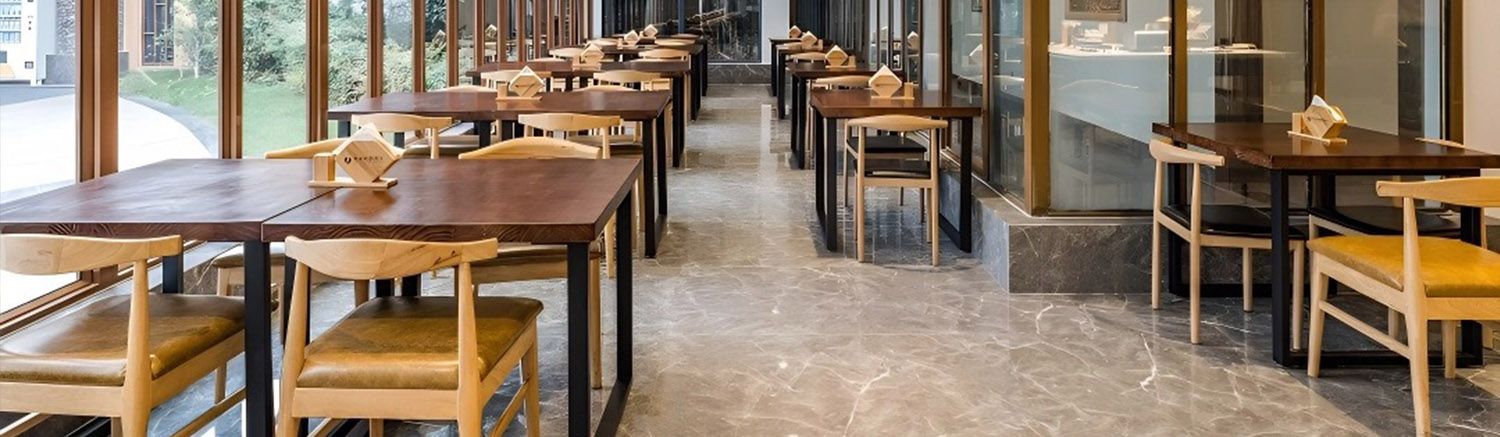
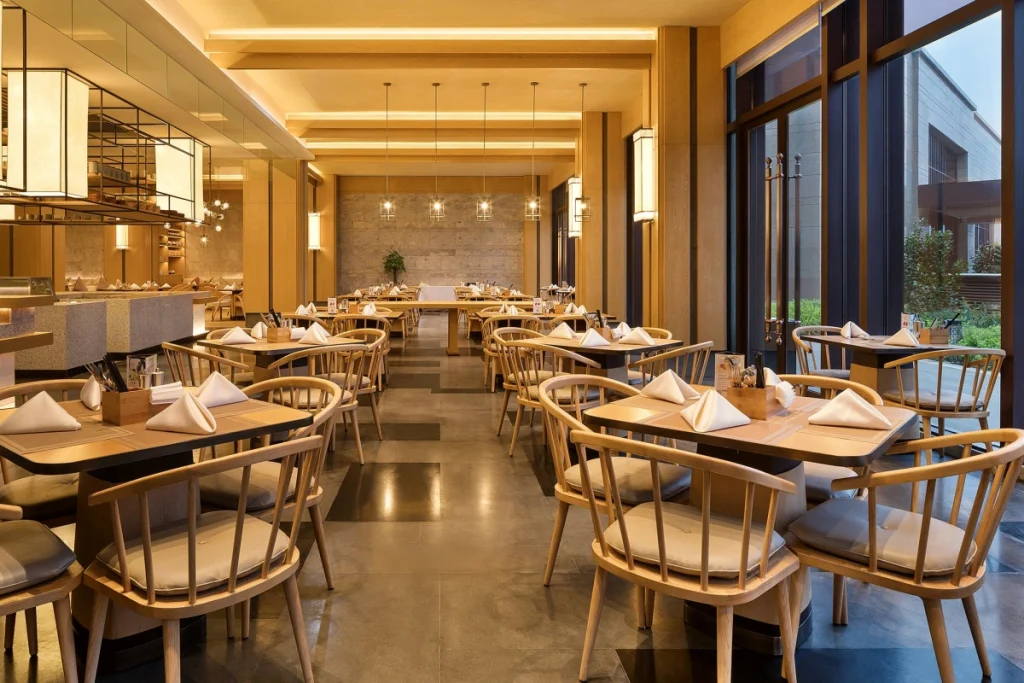
The competition in the catering industry in 2026 has long been focused on details. As the core experience carrier that diners come into direct contact with after entering the restaurant, dining furniture selection directly relates to the store’s operational efficiency and reputation. Many newly opened restaurants always want to cut costs during procurement, choosing eye-catching residential styles to make do, but they never realize that the core value of commercial dining furniture lies in adapting to the high-frequency use scenarios of restaurants. The furniture damage problems that occur within a few months actually make the store pay higher hidden costs.
In the 2026 catering consumption market, diners’ requirements for experience are only increasing, and the furniture in the restaurant endures dozens or even hundreds of times of sitting, moving and cleaning every day. Such high-frequency use intensity is never what residential furniture designed for low-frequency family scenarios can withstand. Frankly speaking, residential dining furniture has neither a reinforced frame nor a special coating on the seat surface, and the sponge density does not meet commercial requirements. When used in a restaurant, wobbly chairs, peeling tabletops and collapsed seat cushions will appear one after another within three months. If diners feel uncomfortable sitting, they will naturally not come back for a second time; the staff also have to spend time on maintenance and replacement. The loss of labor and materials is far more than the procurement cost saved at the beginning. Isn’t this a putting the cart before the horse choice?
To choose the right furniture for restaurants, you don’t need to be confused by fancy appearances. Grasping the core quality dimension comparison, you can easily distinguish the difference between commercial dining furniture and residential styles, which is also the basic criterion for restaurant procurement in 2026.
| Comparison Dimension | Commercial Dining Furniture | Residential Dining Furniture |
|---|---|---|
| Durability & Load Capacity | All pass BIFMA professional load capacity tests, with reinforced metal/solid wood frames, adapted to high-frequency restaurant use | No professional load capacity test, conventional frame technology, only meeting low-frequency family use |
| Core Materials | High-density fire-retardant sponge, wear-resistant and stain-proof fabric, reinforced board tabletop | Ordinary density sponge, conventional textile fabric, ordinary coated tabletop |
| Maintenance Characteristics | The surface is covered with an easy-to-clean and wear-resistant coating, oil stains can be wiped off with a damp cloth, scratch and wear resistant | Ordinary coating is easy to scratch, fabric is afraid of oil stains, and cleaning requires extra care |
| Service Life | Compliant products can be used stably for 3-5 years | Only 3-6 months when used in restaurant scenarios |
Restaurants are densely populated places. In the compliance inspections of catering operations in various places in 2026, the fire retardant standard of furniture has long become a mandatory inspection item, which is also an important dividing line between commercial dining furniture and residential styles. In fact, residential dining furniture is not designed with any fire retardant features, and the fabric and internal fillers are ordinary materials. In case of a fire, it is easy to accelerate the spread of fire; qualified fire-retardant commercial dining furniture, however, is made in accordance with relevant national standards from fabric to filler, which can effectively slow down the fire and gain key time for personnel evacuation in the store. Ignoring this point will not only face compliance rectification, but also lay potential safety hazards for the store.
Konma, which has deep roots in the dining furniture manufacturing field, has always taken the commercial standards and compliance requirements of the catering industry in 2026 as the core, creating high-durability commercial dining furniture adapted to various catering scenarios, making each product balance beauty and practicality. Konma’s restaurant-specific dining furniture controls quality from the source, with strict requirements for core processes and quality inspection procedures:
In communication with restaurant owners, Konma found that everyone always has similar doubts when purchasing dining furniture. Here are three high-frequency questions sorted out for operators opening stores in 2026 as a reference:
Q: When opening a restaurant in 2026, should I focus on appearance or commercial standards first when choosing dining furniture?
A: Appearance is the first impression of diners, but commercial standards are the foundation of operation. If the furniture is frequently damaged, no matter how beautiful the design is, it will reduce the experience. It is recommended to first confirm whether it meets the commercial standards of load capacity and fire protection, and then select the appearance suitable for the store decoration.
Q: The upfront investment of high-durability commercial dining furniture is slightly higher, can it really save costs?
A: In most cases, the answer is yes. A qualified commercial dining furniture can be used stably for 3-5 years, while the residential style needs to be replaced within half a year. Counting the maintenance labor, materials and lost diners, the later cost is much higher than the upfront investment.
Q: For niche catering categories, can I customize dining furniture that meets commercial standards?
A: Of course you can. Brands like Konma can customize easy-to-clean dining furniture and fire-retardant commercial dining furniture according to the scenario needs of catering categories, balancing commercial quality and personalized design of the store.
Restaurant operation in 2026 is always determined by details. Although dining furniture seems to be an ordinary purchase, it is actually a key factor affecting the store’s experience and operational costs. Choosing residential styles for cheapness seems to save money for a while, but in fact, it lays a trap for subsequent operations; investing in high-quality commercial dining furniture that meets commercial standards is essentially building a solid foundation for the store’s operation, making furniture a plus for retaining customers, rather than a shortcoming that consumes costs. Choosing the right dining furniture is actually choosing the long-term operational efficiency of the store.
Stability Testing Beyond visual checks, conduct physica […]
Most safety hazards within commercial catering outdoor […]
In commercial bars, cocktail lounges and gastro bar spa […]
In China’s 2025 catering market, with consumption […]
Related links:
About us Company News Industry Dynamics Table Chair Outdoor-furniture Sofa Latest dining chair Other SSL 100% Secure Transactions