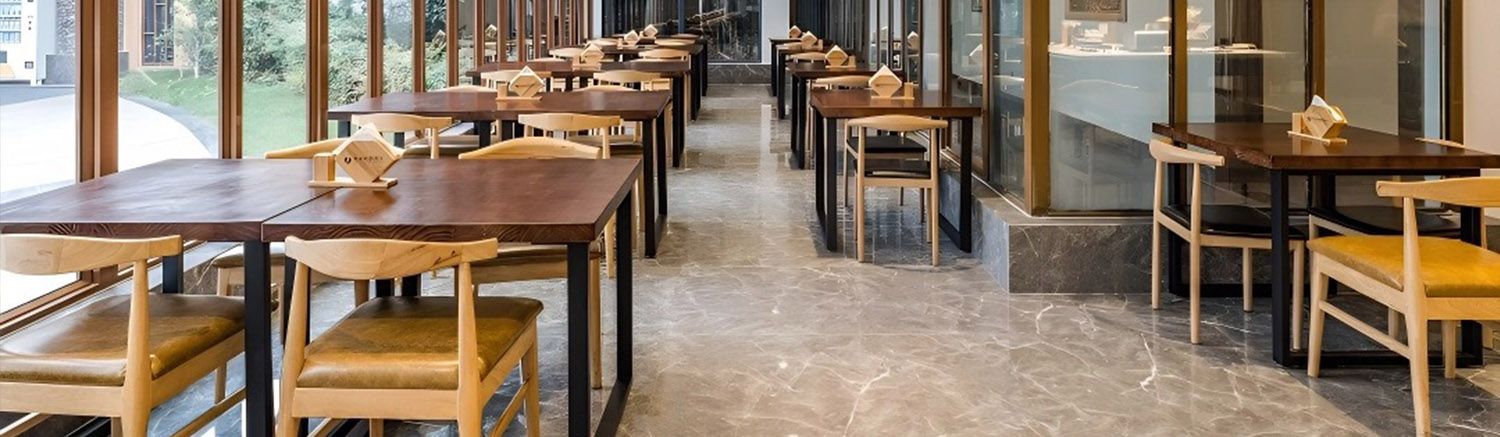
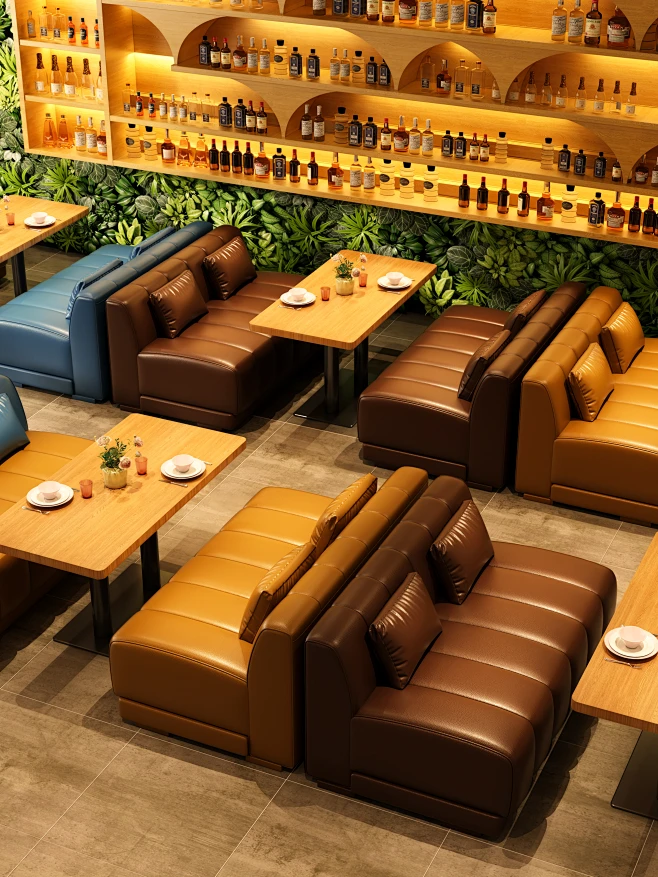
In modern physical catering business operations, labor costs account for 25% to 30% of total restaurant operating expenses. Under the 2026 labor market trend, building infrastructure-oriented furniture that actively cooperates with automatic cleaning work has become an important turning point for stores to cut costs and raise efficiency. Restaurant booths occupy most indoor dining areas and remain the most difficult zones for daily cleaning work. The base design of old-fashioned fixed booths easily accumulates food residues and floating dust, and blocks the moving route of intelligent cleaning machines, which greatly slows down the overall cleaning progress.
For most catering outlets, cleaning workload will rise sharply right after peak dining hours. Most traditional floor-standing restaurant booths adopt fully enclosed edge wrapping or four-column supporting structure, forming numerous closed sanitary dead zones underneath. Poor air circulation easily causes odor accumulation and bacterial reproduction, and regular deep disinfection cannot reach hidden corners. Staff have to bend down to finish manual cleaning, which consumes plenty of working hours, slows down table turnover speed and restricts customer reception capacity. Is recruiting more cleaning staff the only way to solve this persistent cleaning difficulty?
According to on-site practical cleaning data, manual full cleaning takes an average of 45 seconds per square meter in areas with traditional booth bases. In spaces equipped with well-designed sweeping robot compatible restaurant booths, staff only need 10 seconds per square meter to complete detailed supplementary cleaning work. This 4.5:1 efficiency ratio is the core reason why catering stores can steadily cut 15% of annual labor cleaning-related operating costs.
| Booth Base Type | Ground Clearance Standard | Core Practical Advantages | Applicable Store Types | Single Unit Renovation Duration |
|---|---|---|---|---|
| Wall-Mounted Cantilever Booth Base | Zero ground obstruction | Fully free ground space for full-range dead-angle-free cleaning, easy later maintenance. Compliant with ISO 21015 catering furniture strength standard, single seat static load capacity reaches 200kg | Large chain catering brands, high-end leisure dining stores | 45-60 minutes |
| Recessed Kick Plate Booth Base | 15cm standard passage height | Protect integrated furniture structure, fit equipment sensor probes and avoid machine jamming or detour, outstanding moisture resistance | Community featured restaurants, renovated old catering stores | 20-35 minutes |
| Central Single-Pillar Booth Base | Multi-point reserved passage space | Reduce ground contact areas, optimize cleaning routes, balance structural stability and visual aesthetics, simple assembly | Light meal restaurants, trendy casual dining stores | 10-20 minutes |
The 15cm reserved ground clearance is not set arbitrarily. Sensor radars and core functional components of mainstream commercial sweeping robots are all installed at the bottom of the devices. This height fully meets the needs of free movement and precise obstacle avoidance. Meanwhile, it will not damage the overall visual layout of intelligent cleaning friendly dining booths due to excessive reserved space, achieving a perfect balance between practical performance and in-store decoration style.
We provide targeted customized solutions to match diverse store layout demands. For old buildings with cylindrical walls and non-right-angle irregular walls, Konma customized wall-mounted booth systems can realize seamless installation with specially shaped keel accessories. The whole construction will not damage the main wall structure and can perfectly fit all kinds of special wall shapes.
For mixed ground environments combining anti-slip matte tiles and short-pile carpets, we adopt circular arc edge polishing design for booth bases. This design weakens visual deviation caused by ground height difference, and effectively prevents sensor misjudgment, sudden stop and unnecessary detour of sweeping robots, ensuring stable operation of intelligent cleaning equipment in all kinds of ground scenes.
Verified by practical application in numerous chain catering stores, optimized booth base structures greatly improve the full-space cleaning coverage rate of intelligent devices. Most basic cleaning work in dining areas can be finished automatically, and store staff only need to handle fine manual finishing work. Stores that keep optimizing indoor space layout can reasonably reduce cleaning manpower allocation and daily cleaning supplies consumption, effectively relieve overall business operating pressure.
As a professional manufacturer engaged in customized commercial catering furniture, Konma keeps focusing on real operational demands of offline catering scenarios and continuously optimizes mature products including commercial wall-mounted restaurant booths. Our professional field investigation team adjusts furniture structures according to daily store operation procedures, regular cleaning habits and intelligent equipment usage habits. All products strictly comply with international furniture inspection standards while guaranteeing comfortable sitting experience and reliable load-bearing performance. We deliver one-stop customized furniture solutions to satisfy intelligent cleaning development demands for catering stores of all scales.
Most catering business owners pay more attention to appearance design and product quotation when selecting dining furniture, while ignoring long-term operation and maintenance cost consumption. These subtle structural details actually create obvious operating cost gaps among peer catering stores. Selecting catering furniture matching intelligent operation modes is indeed a solid advantage for stores to achieve long-term stable development.
When guests drop $200 or more per head at a fine dining […]
The choice of outdoor restaurant furniture is always a […]
According to the 2025 catering industry survey, 72% of […]
The brand new bar outdoor chairs you just installed for […]
Related links:
About us Company News Industry Dynamics Table Chair Outdoor-furniture Sofa Latest dining chair Other SSL 100% Secure Transactions