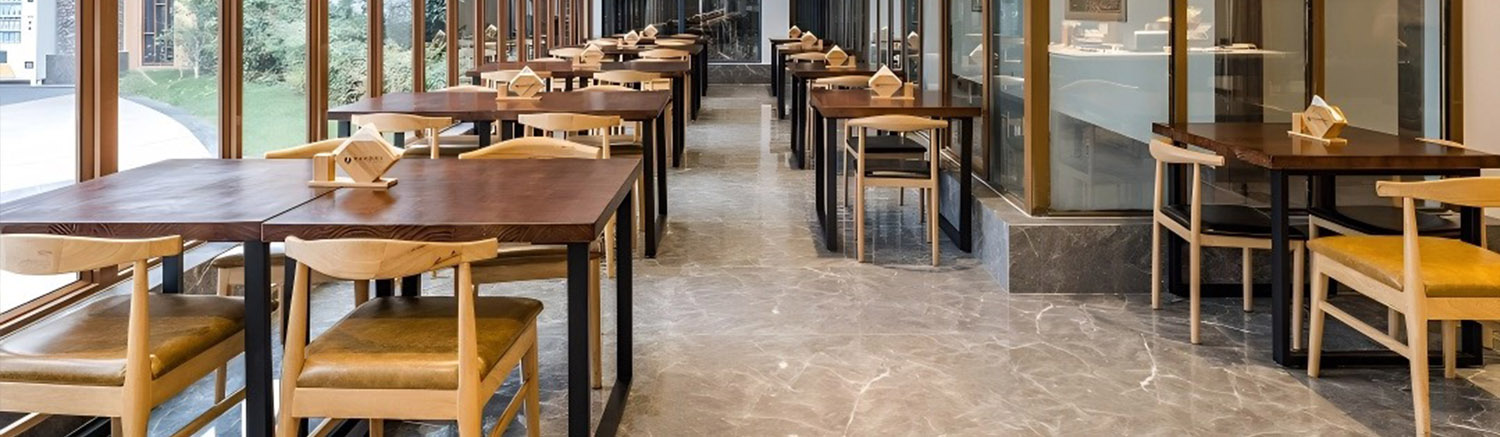
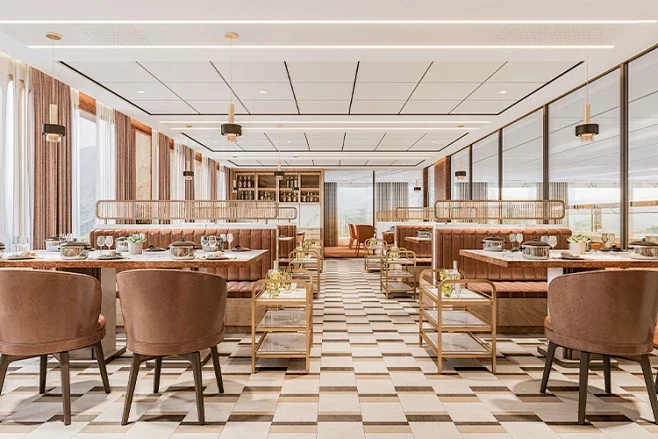
In commercial restaurant design, contract seating is far more than a stylistic backdrop. From an operational and financial perspective, your choice of commercial restaurant chairs serves as an invisible psychological tool directly controlling dining speed, table turnover rates, and total check size.
At Konma Furniture, where we manufacture and supply commercial-grade hospitality seating for global projects, procurement managers and interior designers frequently ask:
“When specifying seating for a venue that requires high volume and fast turnover, should we choose warm orange or cool grey chairs?”
The answer depends entirely on your venue’s operational framework and revenue model. Below is an in-depth breakdown of how these two distinct color palettes influence guest behavior and restaurant profitability.
Warm colors—particularly vivid orange and terracotta tones—exert a distinct physiological effect on human perceptions. Long-wavelength colors trigger subtle sympathetic nervous system responses, nudging guests toward faster action.
Commercial Furniture Procurement Tip:
For high-traffic fast-casual concepts, specify Konma’s orange commercial vinyl chairs or high-density polypropylene (PP) shell seating with powder-coated steel legs. Pair with 3500K–4000K neutral-warm lighting to maximize spatial clarity while maintaining a stain-resistant, easy-wipe surface (tested to Wyzenbeek > 50,000 double rubs).
In contrast to the energetic pulse of warm tones, cool grey is an achromatic color that embodies neutrality, elegance, and calm. It lowers environmental stress and creates an atmosphere of unhurried comfort.
Commercial Furniture Procurement Tip:
For luxury hospitality projects, consider Konma’s charcoal or slate-grey upholstered armchairs filled with 45kg/m³ high-resilience foam and finished in stain-resistant velvet or textured commercial linen. Combine with 2700K–3000K ambient lighting and matte black or brushed metal bases to reinforce a luxury tactile experience.
To assist procurement managers and commercial architects in selecting the right durable upholstered dining chairs for restaurants, we have benchmarked key operational and material specifications below:
| Operational & Engineering Metric | Warm Orange Commercial Chairs | Cool Grey Commercial Chairs |
| Physiological Effect | Stimulates appetite & mild excitement | Calms nervous system, lowers stress |
| Dining Speed | Fast (15%–20% increase in pace) | Slow & relaxed |
| Average Dwell Time | 30–45 Minutes | 60–120+ Minutes |
| Primary Business Goal | Maximize Table Turnover Rate | Maximize Spend Per Head / Check Size |
| Recommended Lighting (CCT) | 3500K – 4000K (Bright & crisp) | 2700K – 3000K (Warm & intimate) |
| Primary Fabric Specification | Heavy-duty vinyl, Easy-clean PP, PU | Fire-retardant velvet, Linen-blend, Stain-treated woven fabric |
| Durability Standard | Wyzenbeek > 50,000 double rubs | Martindale > 40,000 rubs |
| Best Venue Fit | QSRs, Fast-Casual, Food Courts, Ramen Bars | Fine Dining, Hotel Lounges, Craft Cocktail Bars, Bistros |
Modern commercial venues often operate under dual business models—handling rapid lunch rushes while transforming into ambient, high-spend spaces in the evening.
To accommodate both needs, commercial interior designers frequently employ hybrid seating strategies:
Answer: High-saturation warm colors can overwhelm compact spaces if used indiscriminately. For smaller fast-casual venues, opt for orange upholstered seat pads paired with slim metal frames, or use orange exclusively on one side of a booth setup. This maintains an energetic vibe without overcrowding the visual field.
Answer: Beyond color psychology, commercial furniture must withstand heavy daily use. Always specify fabrics with a high wear rating (Martindale >40,000 rubs or Wyzenbeek >50,000 double rubs), stain-resistant coatings (such as Teflon or Nanotex treatments), and international fire safety compliance (CAL 117 or BS 5852 standards).
Answer: Color acts as an operational catalyst, but it works best in tandem with ergonomics, lighting color temperature, and ambient sound. Combining warm orange seating with 3500K–4000K bright task lighting and upbeat background music creates a proven operational ecosystem for fast table turnover.
Specifying restaurant seating is more than a design preference—it is a calculated strategy engineered to optimize floor yield and enhance revenue.
As a dedicated B2B hospitality seating manufacturer, Konma Furniture engineers custom commercial chairs, barstools, and booth seating built to meet strict global hospitality standards. We work closely with architects, project contractors, and purchasing groups to deliver tailored furniture solutions from factory floor to venue door.
Planning a commercial hospitality build or renovation project?
Contact the Konma engineering team today to request CAD shop drawings, custom material swatches, and factory-direct project quotes.
In the evening, push open the door of a light music bar […]
When you walk into an upscale restaurant and see beauti […]
Opening a new restaurant is an adventure filled with pa […]
In 2026, the procurement market for Wholesale Restauran […]
Related links:
About us Company News Industry Dynamics Table Chair Outdoor-furniture Sofa Latest dining chair Other SSL 100% Secure Transactions