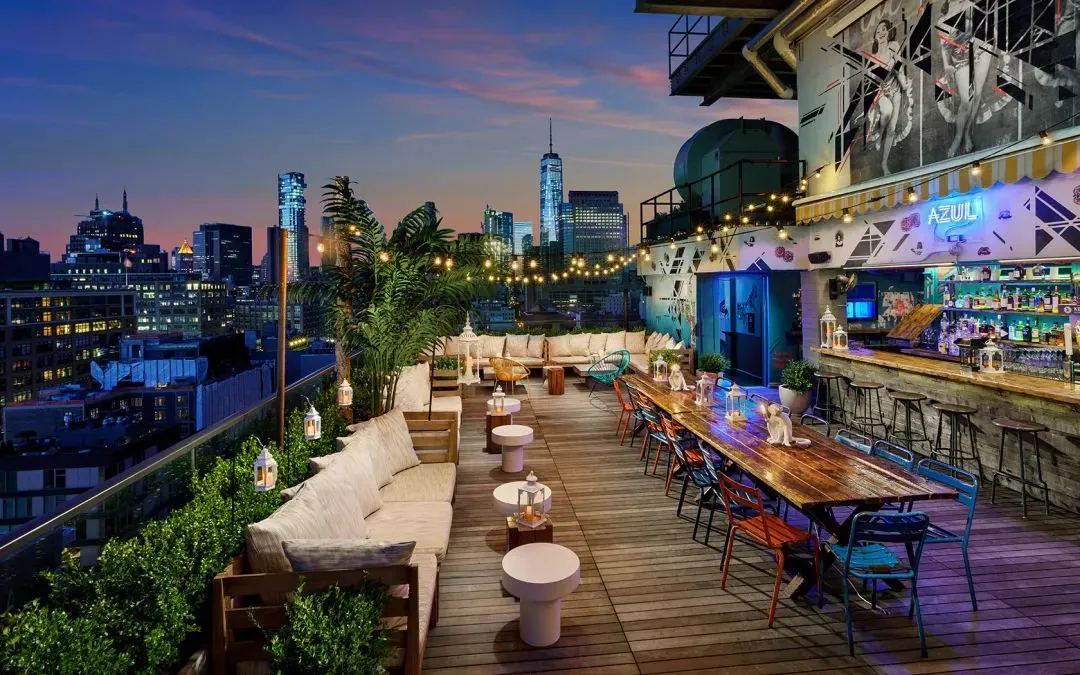
The brand new bar outdoor chairs you just installed for your venue’s outdoor area start bubbling, peeling, and oozing rust down the legs just 3 months into Bangkok’s rainy season, turning your carefully designed scenic spot into an eyesore that drives guests away. In extreme environments like Southeast Asia and coastal regions with high humidity and salt spray, regular painted bar outdoor chairs simply can’t withstand constant exposure to moisture and salt. Not only do they drag down your venue’s aesthetic, but frequent replacements also add up to significant costs. Today, we’re breaking down the 4 core rust-proof processes that stand up to extreme climates, to maximize the lifespan of your bar outdoor chairs and eliminate the hassle of constant replacements.
Let’s be real, 80% of premature rusting on bar outdoor chairs stems from missing process steps that are most often overlooked by manufacturers. Many brands cut corners by skipping substrate pre-treatment, or spraying top coat directly without primer. The finish may look smooth at first, but the microscopic oxide layer underneath continues to corrode nonstop. Continuous moisture from the rainy season and salt spray particles from the sea will quickly penetrate through tiny pinholes in the paint, lifting the entire finish from the inside out, resulting in red rust and peeling in just a few months, completely failing to meet the requirements of long-term outdoor use.
Substrate pre-treatment is the foundation of the entire rust protection system. Without a solid foundation, even the thickest paint finish is useless. When Konma manufactures bar outdoor chairs, we strictly enforce the Sa2.5 industrial shot blasting standard, using angular steel shot to hit the steel surface at a high speed of 60m/s, completely removing oxide scale, welding slag, oil stains and microscopic burrs, leaving a uniform metal rough surface on the steel to provide sufficient anchoring points for subsequent coatings.
Immediately after shot blasting, we perform zinc-based low-temperature phosphating treatment to form a dense 3-5μm phosphating film on the metal surface. This film can completely block the contact between the substrate and the air, eliminating the possibility of oxidation and rust, and greatly improve the adhesion of the coating, fundamentally avoiding the problem of large-scale paint peeling in the later stage.
With the substrate properly prepared, the first critical protective barrier is the zinc-rich epoxy primer for outdoor chairs. Put simply, this high-solids primer with a zinc content of ≥80% acts as a dedicated protective substitute for the steel. Even if the top coat sustains micron-level scratches or chips later on, corrosive elements will oxidize the more reactive zinc first, never reaching the steel core underneath – this is the sacrificial anode cathodic protection principle in electrochemistry.
Many low-cost bar outdoor chairs on the market either skip the primer entirely, or apply a thin coat of less than 10μm, which offers virtually no protection. All Konma bar outdoor chairs feature a primer dry film thickness strictly controlled between 25-30μm, applied with high-pressure airless spraying technology, evenly covering every corner of the substrate, even hard-to-reach areas like welds, screw holes, and the bottom of chair legs, to form a complete protective closed loop and block rust formation at the source.
With electrochemical protection from the base layer, the intermediate coat must withstand long-term exposure to sun, wind, and rain – the core of this step is outdoor-grade polyester powder coating. Many low-cost products on the market use regular indoor powder coating, which looks smooth initially, but starts to chalk, fade, and crack within 6 months in hot, humid environments.
Our Konma bar outdoor chairs use AkzoNobel’s Interpon series of outdoor-specific polyester powder, compliant with the AAMA 2604 architectural weather resistance standard. The powder is applied evenly to the primer via electrostatic spraying, then cured at a constant 200℃ for 15 minutes, creating a coating with extremely high cross-link density, free of hidden defects like sagging or pinholes. Regular indoor powder only achieves 300 hours of UV accelerated aging without chalking, while this outdoor-specific powder delivers 3000 hours with no significant chalking and a color difference ΔE ≤2, maintaining a complete finish and stable color even in year-round direct sunlight.
If your venue is within 3 kilometers of the coastline, or in Southeast Asia areas hit by regular typhoons and continuous heavy rain, the first three steps are not enough – you must add this anti-salt spray clear top coat. Many people see this clear coat as an optional cosmetic touch, but it is actually the first line of defense against salt spray, acid rain, and dew.
Konma uses a fluorine-modified acrylic anti-salt spray clear coat, which delivers over 40% better salt spray resistance than regular varnish. It acts like an invisible, dense protective raincoat for the chair, blocking salt spray, moisture, and acidic stains from penetrating the coating – even heavy early morning dew along the coast cannot seep through. For custom coastal bar chairs designed for heavy salt spray areas, we also apply a double clear coat process, with scratch-resistant additives mixed into the coating. Daily friction from guests pulling chairs and placing items will not easily scratch the finish, adding a critical second layer of protection for the underlying coatings.
| Core Test Items (Test Standard) | Common Industry Issues | Konma 4-Layer Rust-Proof Standards | Business Impact |
|---|---|---|---|
| Neutral Salt Spray Test (ASTM B117) | < 500h, rust starts in 3 months | 1500h-3000h with no red rust | Reduce furniture repurchase costs by 60%, cut venue operating expenses |
| Coating Adhesion Test (ISO 2409) | Grade 2-3, easy to peel on impact | Grade 0, full adhesion between coating and substrate | Avoid “scarred” rust caused by bumps, maintain the venue’s visual texture for a long time |
| Weather Resistance Accelerated Aging Test (QUB 313) | 300h rapid chalking and fading | 3000h no significant chalking, color difference ΔE ≤2 | Maintain the premium visual texture of the bar terrace year-round, no need for frequent refinishing |
| Primer Dry Film Thickness | < 10μm or no primer, no electrochemical protection | 25-30μm high-solids zinc-rich epoxy primer | Establish a complete sacrificial anode electrochemical protection layer, eliminate internal corrosion of the substrate |
| Total Coating Dry Film Thickness | 40-60μm, too thin protective layer easy to damage | 120-150μm, 4-layer locked protection | Withstand long-term erosion in high-humidity and high-salt environments, increase service life by more than 5 times |
| Impact Resistance Test (GB/T 1732) | 30kg·cm, paint chips on minor impact | 50kg·cm, resistant to daily friction and impact | Adapt to high passenger flow scenarios in bars, reduce paint damage caused by daily use |
At the end of the day, reliable rust protection for bar outdoor chairs never comes from a quick fix with a single coat of paint. It comes from strict control of every process step, starting with substrate treatment. For venues in year-round high-humidity, high-salt spray environments, choosing a mature rust-proof process is far more hassle-free than replacing chairs frequently. If you’re looking for bar outdoor chairs that can withstand extreme climates, the full Konma product line is built with this field-proven 4-layer rust-proof process, perfectly adapted to the needs of all kinds of extreme climate environments.
Every home deserves a special spot where the family can […]
You’ve invested in custom furniture expecting qua […]
In 2026, more and more people pay attention to the crea […]
In 2026, the competition in the catering industry has i […]
Related links:
About us Company News Industry Dynamics Table Chair Outdoor-furniture Sofa Latest dining chair Other SSL 100% Secure Transactions