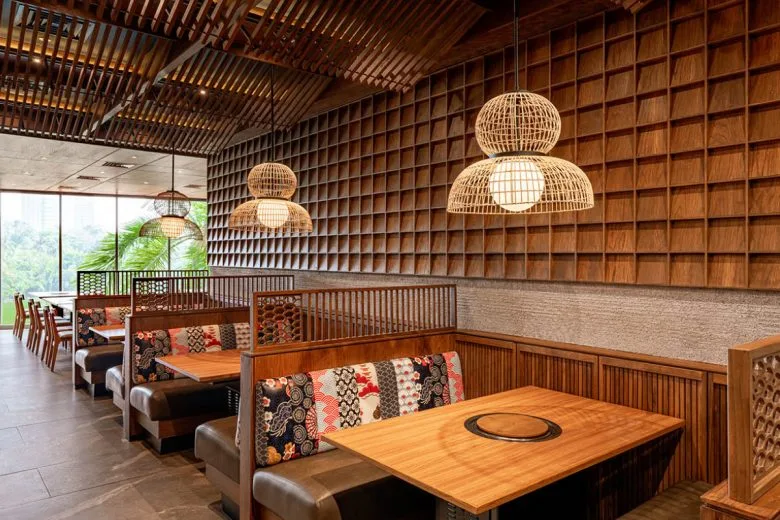
In 2026, the catering industry continues to witness rapid iteration of business formats and shorter commercial shop lease terms. Most store operators hesitate to invest heavily in fixed decoration. As the most frequently used and largest proportion of commercial furniture in restaurant spaces, modular booths have become a core consideration for store operation layout. With an ultra-high relocation recovery rate of 95%, modular booths are becoming a key tool for leased restaurants to hedge operational risks and reduce asset loss. Konma, which has been deeply engaged in custom commercial catering furniture for many years, has taken this advantage to the extreme, making custom modular booths not only suitable for various operating scenarios but also helping stores retain asset value. As a professional commercial modular booth customization manufacturer, Konma’s products are more in line with the actual operational needs of catering stores.
Every catering operator understands that the biggest concern of leasing operation is that invested decoration and furniture cannot be moved or reused. Traditional hard-fitted restaurant booths are permanently fixed to the store space once installed. When the lease expires, the store relocates or the business format upgrades, the whole set of booths can only be scrapped on site, turning early decoration investment into sunk costs. Especially for internet-famous restaurants, which have fast business iteration and frequent relocation needs, how to realize furniture reuse is even more important. The emergence of detachable restaurant booths has perfectly solved the long-standing operational dilemma of catering operators. Among them, Konma’s modular booths have become the industry’s first choice with mature technology and thoughtful design, and its restaurant booth durability improvement plan has also been recognized by many catering brands.
| Comparison Dimension | Traditional Fixed Booths | Konma Modular Booths |
|---|---|---|
| Financial Attribute | Decoration Loss (Sunk Cost) | Company Asset (Fixed Asset) |
| Secondary Investment Cost | 100% (need to re-demolish, transport, clear the site and purchase materials) | <5% (only a small amount of logistics and manual assembly fees are required) |
| Installation Cycle | 3-5 days (on-site carpentry construction, heavy dust) | 4 hours (finished product plug-in, zero dust, ready for immediate use) |
| Environmental Protection Level | On-site painting/adhesives with strong odor | Factory dust-free painting/formaldehyde-free glue, ready for business after installation |
| Disassembly and Relocation Capacity | Completely non-detachable, 0 recovery rate after relocation | Modular splitting, overall reuse recovery rate over 95% |
| Spatial Layout Adjustment | Fixed structure with no modification, only suitable for single space pattern | Recombine shapes at will, adapting to halls, private rooms and corner vacancies, which can meet the needs of booth size layout suitable for small fast-food restaurants |
| Style Renovation Difficulty | Overall demolition and reconstruction required with long construction period | Only replace the backrest upholstery to complete style renewal in a short time; fabrics can be selected from the recommended categories of stain-resistant and easy-to-clean fabrics for commercial booths, and at the same time adapt to convenient method for replacing booth upholstery, no professional operation required |
| Daily Maintenance Mode | Partial damage leads to closure and maintenance of the whole row | Isolated fault of independent units, replacement without affecting business |
| Long-term Value Retention | Rapid depreciation with no secondary circulation value | Durable frame for repeated investment across stores with considerable value retention rate |
In fact, most catering decoration designers now take the initiative to recommend modular booths with invisible connectors when designing store solutions. Ordinary spliced booths are prone to gap misalignment and shaking looseness. Konma’s self-developed invisible connection structure abandons exposed hardware accessories. After assembly, the joints are seamless, with visual texture comparable to high-end custom fixed furniture, breaking the stereotype that modular furniture is cheap with obvious splicing traces. What’s more worth mentioning is Konma’s physical structure black technology, which makes the durability of modular booths far exceed industry standards, meeting the needs of high-end catering modular booth design.
Different from the common screw connection on the market, Konma modular booths adopt an embedded self-locking mechanism. This structure draws on the tenon-and-mortise idea in the construction field, combined with high-strength alloy connectors. When the booth is subjected to vertical pressure, the connection points will become tighter due to gravity, thus completely solving the abnormal noise problem that commercial furniture is prone to after long-term high-frequency use. Whether it is a fast-food restaurant with more than 10 table turns per day or a coffee shop with stable passenger flow, this structure can ensure the stability of the booth for long-term use without frequent maintenance and adjustment.
The 2026 catering decoration trend leans more toward asset-light, iterable and high-end aesthetics, abandoning one-time hard decoration stacking and focusing more on the reusability and adaptability of furniture. Modular booths perfectly fit this trend. They not only meet the daily dining comfort demand but also adapt to various business scenarios such as internet-famous catering, fast casual dining, leisure bars and coffee light meals. There is no need to invest irreversible decoration costs for short-term leases, nor limit operational adjustments due to solidified space patterns. This is the core reason why more and more catering entrepreneurs and chain brands favor this type of furniture. Especially for stores that need to frequently adjust the layout or have relocation plans, a 95% recovery rate means that the furniture costs invested in the early stage can be recovered to the greatest extent, effectively avoiding the core risks of lease operation.
For catering operators under the leasing model, furniture selection is not only about immediate appearance but also about long-term operational risk hedging and asset flexibility. Rooted in the design and manufacturing of commercial booths, Konma, as a professional commercial modular booth customization manufacturer, integrates the structural stability, aesthetic texture and reuse value of modular booths. With the advantages of 95% recovery rate and the black technology of embedded self-locking mechanism, it allows operators to compromise neither decoration grade nor bear the sunk risk of heavy asset investment, making it a high-quality choice for catering store layout in 2026. To learn more about styles and customization solutions, visit Konma’s official website to view the complete product series and get exclusive adaptation plans.
Previous article:Premium Omakase Counter Design: Elevating Japanese Restaurant Texture through Seamless Sintered Stone and Solid Wood Joining Craftsmanship
Next article:Lightweight Alloy Restaurant Chair: 3.5kg One-hand Lifting, Passed 200kg Static Pressure Test, Suitable for Hotel and Chain Catering Commercial Scenarios
In restaurant space planning, choosing the right table […]
New Variable in Catering Operation: Why Furniture Infra […]
In 2026, the procurement market for Wholesale Restauran […]
You spent a small fortune on your outdoor dining patio […]
Related links:
About us Company News Industry Dynamics Table Chair Outdoor-furniture Sofa Latest dining chair Other SSL 100% Secure Transactions