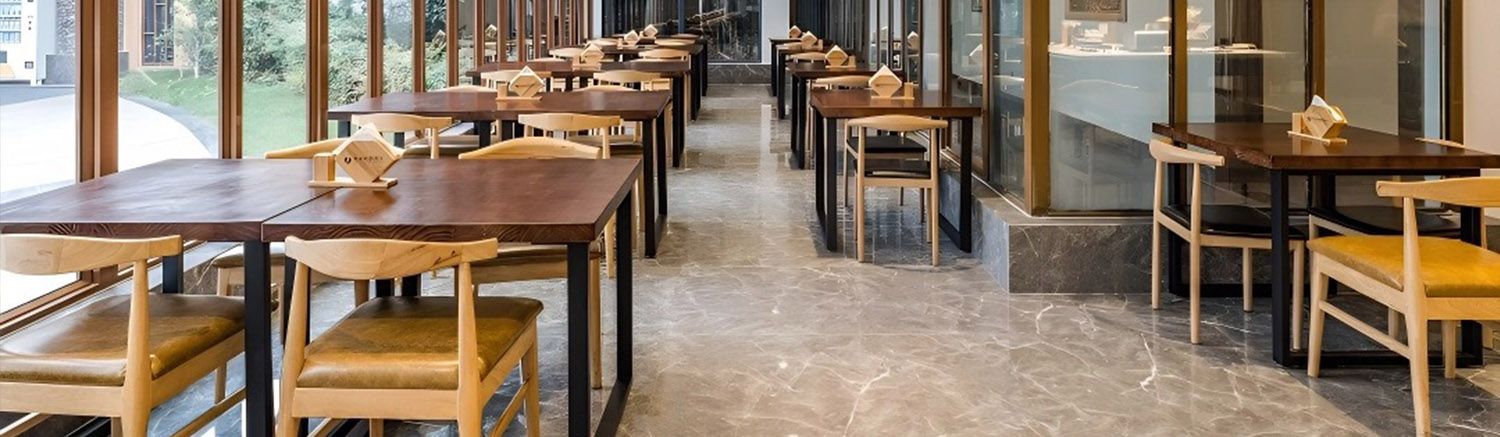
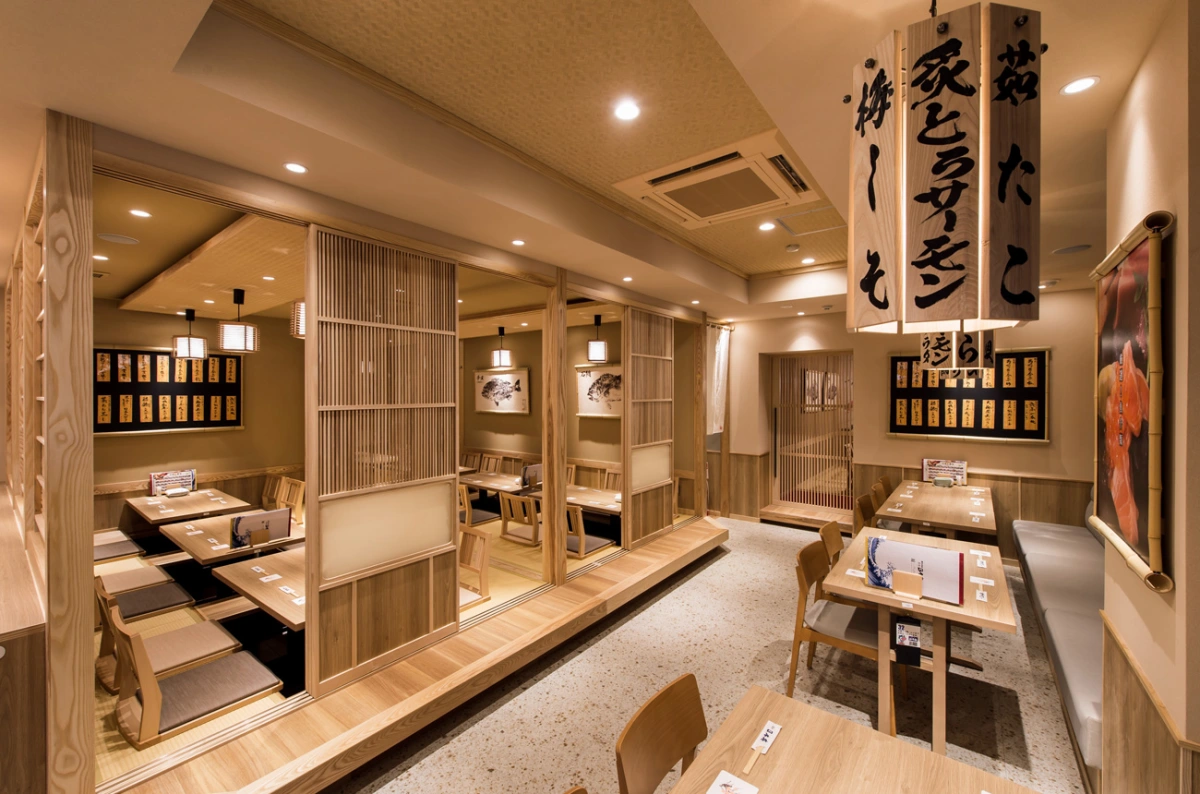
Stepping into a high-end Japanese restaurant, visitors are instantly captivated by the soft texture and sleek lines of the counter. The core element that supports the overall spatial style is the table, especially the Omakase counter table. Many catering designers face a common dilemma during customization: all-stone countertops feel cold and lifeless, while pure solid wood tends to absorb moisture and deform easily.
If you want to create a custom counter table tailored for premium Japanese dining spaces, how can you balance material quality, craftsmanship and long-term structural stability? With years of dedicated experience in high-end commercial furniture customization, Konma relies on its in-house material laboratory and precision production line to perfect the seamless joint craft of engineered stone countertops and solid wood edges, becoming a preferred brand for many upscale Japanese restaurants.
In fact, high-end Japanese dining scenarios set far higher standards for Japanese restaurant dedicated operation tables than mere visual appeal. Frequent sashimi preparation, persistent steam and oil fume in the kitchen, and drastic temperature changes across seasons continuously test material compatibility and splicing techniques. Top-tier Omakase restaurants rarely adopt single-material counters, simply because designers seek the perfect balance of scratch resistance, warm tactile feeling and structural stability. The engineered stone and solid wood spliced counter naturally makes up for the inherent flaws of single materials.
| Material Category | Thermal Expansion Coefficient at 25℃ | Temperature & Humidity Alternating Expansion Rate | Core Advantage Conclusion |
|---|---|---|---|
| High-Density Engineered Stone | $3.8 \times 10^{-6}/^\circ C$ | 0.02% | Impermeable, easy to clean, scratch and high temperature resistant, ideal base material for counter operation area |
| North American Black Walnut | \(4.1 \times 10^{-6}/^\circ C\) | 0.15% | Delicate warm touch, premium wood grain, greatly enhances luxury atmosphere and customer experience |
| Japanese Hinoki | \(3.9 \times 10^{-6}/^\circ C\) | 0.12% | Natural antibacterial property with elegant wood fragrance, minimalist premium texture, standard choice for high-end Omakase |
One may wonder whether special structural treatment is necessary given the minor difference in material expansion coefficients. Commercial catering spaces can hardly maintain constant temperature and humidity all year round. Seasonal temperature fluctuations and continuous kitchen steam will amplify subtle physical differences between materials, eventually leading to common issues such as joint cracking, edge warping and water seepage.
Konma self-developed V-groove hidden expansion joint technology adopts 0.5mm micro-cut precision carving, reserving sufficient buffer space for natural material deformation, and fundamentally eliminating hidden risks like joint cracking, seam separation and water penetration.
The complete seamless joining craft contains many sophisticated details that cannot be replicated by ordinary manufacturers. Each process directly determines the service life and texture performance of commercial bar tables:
The most prominent pain point of commercial catering furniture is easy aesthetic depreciation and structural aging. Ordinary spliced tables will suffer from black dirty joints, moisture-induced wood deformation and glue delamination after only a few years of use. Frequent replacement increases operational costs and damages the unified interior style of the restaurant.
Through three layers of protection including precise material coefficient matching, reserved deformation buffer structure and food-grade sealing bonding, Konma’s seamless craft enables Omakase custom tables to maintain stable structure and intact appearance in high-humidity and high-frequency catering scenarios, with a far longer service life than conventional products on the market.
💡 Konma Expert Design1 Avoidance Checklist
In high-end Japanese dining space design, details always define the overall style. A premium Omakase counter table is more than just a food preparation station; it is a silent representation of the restaurant’s aesthetic taste and quality strength.
Konma always implements full-link quality control from raw material selection, structural mechanics design and CNC precision cutting to hand polishing. We focus on the core seamless craft of engineered stone and solid wood, providing customized furniture overall solutions with high compatibility, stability and durability for all kinds of high-end catering spaces.
Curved sofas and circular banquettes are widely favored […]
Stability Testing Beyond visual checks, conduct physica […]
In 2026, the catering industry continues to witness rap […]
Stepping into a high-end Japanese restaurant, visitors […]
Related links:
About us Company News Industry Dynamics Table Chair Outdoor-furniture Sofa Latest dining chair Other SSL 100% Secure Transactions