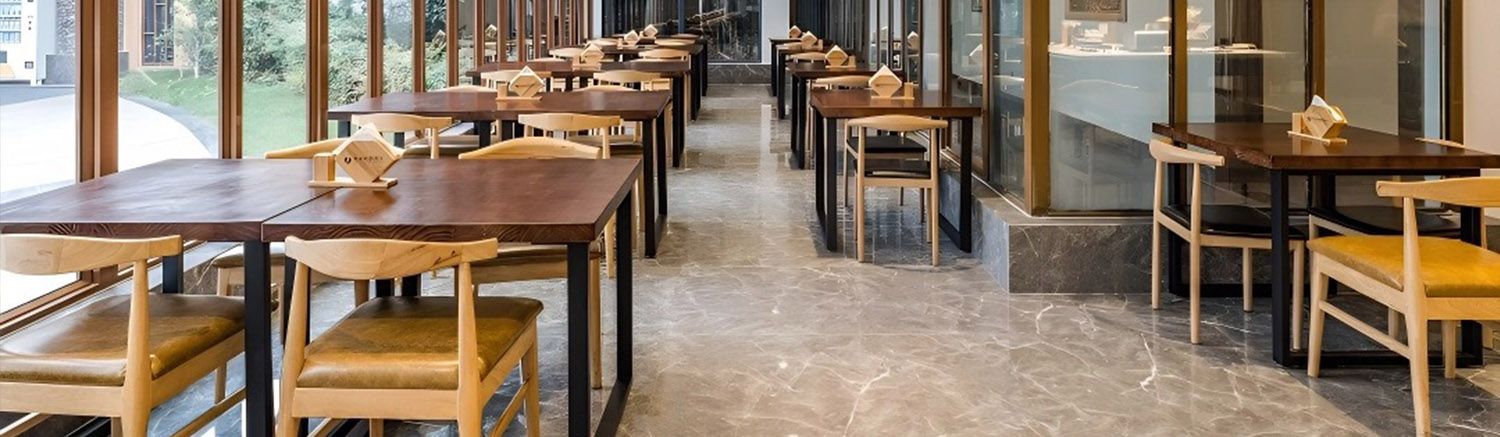
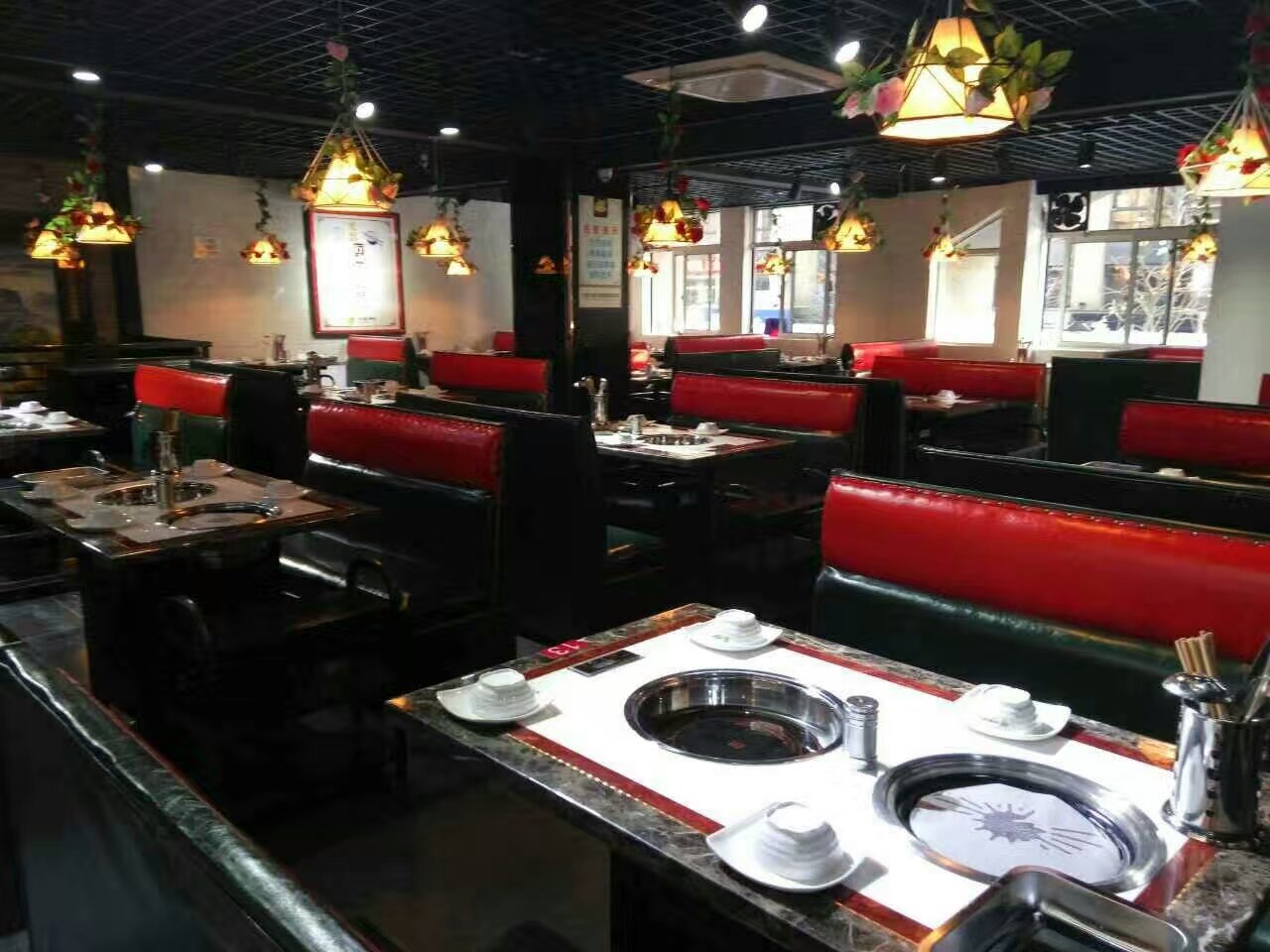
When opening a hot pot restaurant, the selection of hot pot table and chairs not only affects the interior decoration style but also directly impacts customer dining experience, equipment durability, and long-term operating costs. Faced with a wide variety of materials and styles on the market, how to choose accurately? What details should be noted in daily use to extend their service life? This practical guide breaks it down for you.
| Material Type | Core Features | Suitable Scenarios | Notes |
|---|---|---|---|
| Ceramic | High temperature resistance (up to 800℃), easy to clean, oil-resistant, improved impact resistance after recent upgrades | Chain hot pot restaurants, mid-to-high-end stores | Avoid heavy impact on edges and corners |
| Marble | Thick texture, high aesthetic value | High-end restaurants | Prone to color penetration, requires regular anti-permeability treatment |
| Artificial Stone | Seamless splicing, customizable shapes | Featured theme stores | Not heat-resistant, avoid direct contact with hot pot bottoms |
| Tempered Glass | Transparent and lightweight, good visual effect | Internet-famous stores, small-scale stores | Prone to explosion due to sudden temperature changes, choose 3C certified products |
| Fireproof Board | Cost-effective, wear-resistant | Fast-food style hot pot restaurants | Edges are prone to moisture deformation |
The panel material of hot pot table and chairs directly affects durability. Common types include fireproof board, melamine board, solid wood, and density board with solid wood veneer. Among them, solid wood and fireproof board panels have the highest prices (market price around 300-800 yuan/set) but reliable quality; special attention: some merchants will pass density board with solid wood veneer off as pure solid wood products. Identification tip: check the edge texture of the panel—pure solid wood has continuous edge texture, while veneered materials may have broken texture.
Among various materials, ceramic hot pot table and chairs have become the first choice for hot pot restaurant owners in recent years, mainly for three reasons:
Q: Are steel-wood frame hot pot table and chairs more suitable for humid areas than solid wood ones?A: Yes. The metal part of the steel-wood frame has undergone anti-rust treatment, which is not easy to mold and deform in the humid environment in southern China. If the solid wood frame is not equipped with a good moisture-proof coating, it is prone to wood expansion and paint peeling.
Q: Are ceramic tabletop hot pot table and chairs easy to break during transportation?A: Currently, ceramic tabletops adopt double-layer buffer packaging + edge reinforcement design, and the breakage rate has been controlled within 0.5%. Merchants usually provide transportation breakage replacement services; you can confirm the terms in advance when purchasing.
Choosing the right hot pot table and chairs can not only improve customer dining comfort but also reduce later maintenance and replacement costs. From material adaptation to daily maintenance, mastering these details allows hot pot table and chairs to become a “plus item” rather than a “trouble” for hot pot restaurants.
For high-traffic hot pot restaurants, the tabletop is a […]
In Abu Dhabi’s luxury dining scene, the most succ […]
In March 2026, as competition in the bar industry becom […]
In the competitive KTV bar industry, to retain customer […]
Related links:
About us Company News Industry Dynamics Table Chair Outdoor-furniture Sofa Latest dining chair Other SSL 100% Secure Transactions