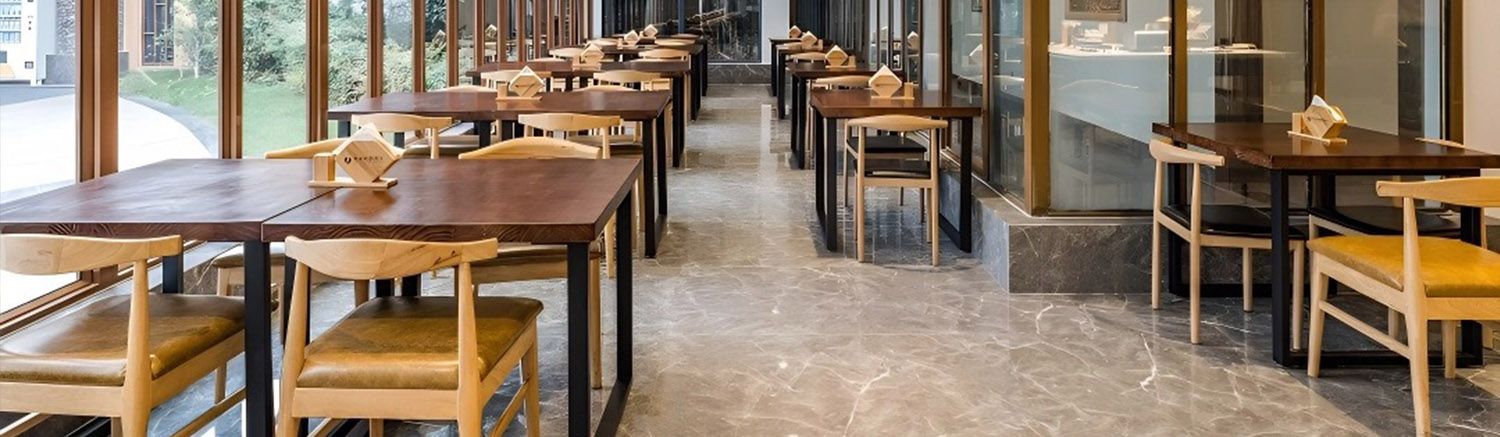
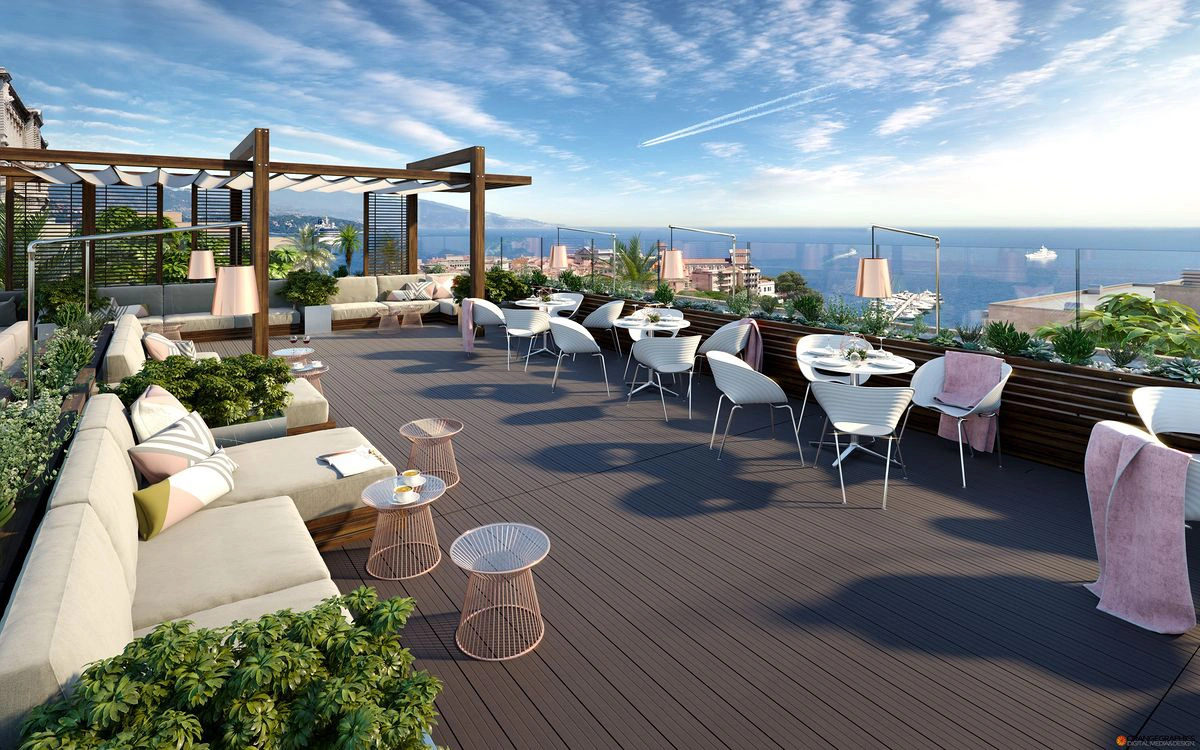
The choice of outdoor restaurant furniture is always a key consideration for catering operators in coastal cities such as Dubai and Miami. After all, the year-round scorching sun exposure and high-concentration salt spray erosion mean that ordinary outdoor furniture often rusts, fades, and cracks within half a year. Konma, with years of experience in customizing furniture for coastal scenarios, has compiled this red and black list of materials to help everyone avoid pitfalls and choose the right anti-corrosion outdoor restaurant furniture for coastal areas. At the same time, we break down the easily overlooked details to make the furniture not only durable but also fit the restaurant’s style.
Many catering operators wonder why outdoor furniture can last 3-5 years in inland restaurants but needs to be replaced frequently in coastal ones. The answer is simple: the two hidden “killers” in the coastal environment are far more corrosive to furniture than imagined.
First is salt spray erosion. The sea salt particles floating in the coastal air wear down the furniture surface like fine sand, especially metal materials. Even a tiny scratch will damage the anti-rust layer, leading to large-scale rust in less than 2 months. The rust not only affects the appearance but also stains the ground and tableware, bringing unnecessary troubles to the restaurant. More importantly, ordinary steel is heavy and easy to tip over in strong coastal winds, posing safety hazards.
Second is strong UV radiation. The maximum temperature in Dubai can reach above 45℃ in summer, and the annual sunshine duration in Miami exceeds 3000 hours. Long-term exposure to the sun will embrittle plastic materials, crack wooden materials, and fade fabrics. Even ordinary materials claiming to be “outdoor-specific” can hardly resist this double test.
According to the latest industry monitoring data, outdoor restaurant furniture within 1 mile of the coastline corrodes and ages 10 times faster than that in inland areas. The rust rate of metal materials is as high as 82%, and the powdering rate of plastic rattan is more than 90%. To be honest, choosing the wrong material will not only increase operating costs but also affect the overall image of the restaurant due to frequent furniture replacement, which is not worth the loss.
Based on thousands of real coastal catering cases that Konma has been involved in, the following 3 types of materials are “disaster areas”. Be sure to avoid them when purchasing in bulk, otherwise the later maintenance cost will far exceed the purchase price difference:
🚫 Iron/Ordinary Steel: “Rust Amplifier” in Salt Spray Environment
Fatal Flaw: Even if the surface is treated with basic anti-rust paint, as long as a small scratch damages the paint surface, high-concentration salt spray will quickly penetrate. Usually, large-area flaky rust will appear within 2 months, which cannot resist the long-term erosion of coastal salt spray at all.
Collateral Losses: Rust water will not only seriously reduce the visual grade of the restaurant but also seep into expensive outdoor carpets or wooden floors, causing irreversible pollution. In addition, steel is too heavy to move, and it is easy to tip over in strong coastal winds, posing safety hazards.
🚫 Ordinary PE Rattan: “Disposable Consumable” Under the Scorching Sun
Fatal Flaw: Plastic materials are extremely sensitive to UV rays and have not undergone professional anti-UV treatment. Under direct high temperature of 45℃ in Dubai’s summer, low-quality PE rattan will fade, become brittle and eventually powder and break within 3 months. Even high-quality ordinary PE rattan can barely last for 1 year.
Collateral Losses: Damaged rattan can directly scratch guests’ clothes or skin, bringing serious complaint risks. Frequent replacement of rattan furniture will also increase the restaurant’s operating costs and labor costs, affecting the restaurant’s reputation.
🚫 Untreated Pine/Miscellaneous Wood: “Bacteria Hotbed” in Humid Climate
Fatal Flaw: Coastal cities not only have sun exposure but also extremely high air humidity. Soft wood without deep anti-corrosion treatment is prone to water absorption, expansion and cracking. Salt spray and moisture will continuously penetrate the wood, accelerating decay.
Collateral Losses: After internal water accumulation and mold growth, it will emit an unpleasant musty smell and breed bacteria, completely destroying the hygiene standards of the catering space, affecting the guest dining experience, and even triggering health inspection issues.
In response to the double test of sun exposure and salt spray in coastal areas, Konma has selected 3 highly adaptable materials through strict environmental testing and practical scenario application in combination with specific industrial standards. They can not only meet the durability needs of outdoor use but also fit the restaurant’s decoration style, ensuring stable quality even when purchased in bulk.
✅ Solid Aluminum Alloy (Powder Coated): “Rust-Proof King” for Coastal Scenarios
Core Advantages: As the core material of aluminum outdoor restaurant tables and chairs, Konma uses thickened wall tubes of more than 1.5mm, combined with electrostatic powder coating technology. This coating meets the ISO 9227 Neutral Salt Spray Test (NSS) standard, showing no rust or peeling after 240 hours of salt spray testing, which can completely isolate salt spray and UV rays, eliminating rust from the root.
Adaptation Scenario: Aluminum alloy has a moderate weight, which can not only resist strong coastal winds but also be easily moved and placed, suitable for bulk use in various coastal restaurants. It can be easily adapted to both simple and light luxury styles, and stable quality guarantee can be enjoyed when purchasing in bulk.
✅ Grade A Burmese Teak: “Texture Choice” for High-End Restaurants
Core Advantages: If the restaurant takes a high-end texture route, teak outdoor restaurant furniture is definitely the first choice. The Grade A Burmese teak selected by Konma is rich in natural oil, which can achieve moisture-proof, insect-proof and salt spray-resistant effects without additional anti-corrosion treatment. Its natural texture and weather resistance meet the high-end industry standards.
Adaptation Scenario: After long-term sun exposure, teak will naturally show a warm silver-gray color, which not only does not fade but also becomes more textured, with a service life of more than 10 years. Many terraces of high-end coastal hotels in Dubai use this type of furniture to highlight the restaurant’s style.
✅ Polywood/WPC: “Worry-Free Choice” with Zero Maintenance
Core Advantages: For restaurants pursuing zero maintenance costs,polywood outdoor restaurant tables and chairs are the best solution. This material is made of plastic and wood fiber pressed at high temperature. After professional weather resistance testing, it is completely non-absorbent, non-mildew, and resistant to salt spray immersion and high-temperature sun exposure. Even if placed by the sea for a long time, it will not fade or deform.
Adaptation Scenario: Its appearance can imitate solid wood texture with high appearance, and no regular maintenance is required, saving the manpower and cost of later maintenance. It is the first choice for bulk purchase of many chain coastal restaurants in Miami, balancing practicality and economy.
| Material Type | Salt Spray Resistance | UV Sun Resistance | Service Life | Maintenance Frequency | Coastal Adaptability |
|---|---|---|---|---|---|
| Ordinary Steel | ★☆☆☆☆ | ★★☆☆☆ | 6-12 Months | Once a Week (Derusting, Touch-up Paint) | Low |
| Ordinary PE Rattan | ★★☆☆☆ | ★☆☆☆☆ | 3-12 Months | Once a Month (Cleaning, Reinforcement) | Low |
| Untreated Pine | ★☆☆☆☆ | ★★☆☆☆ | 6-18 Months | Once Every 2 Weeks (Moisture-proof, Mildew-proof) | Low |
| Thickened Solid Aluminum Alloy (Powder Coated) | ★★★★★ | ★★★★☆ | 5-8 Years | Once a Month (Simple Cleaning) | High |
| Grade A Burmese Teak | ★★★★☆ | ★★★★★ | More Than 10 Years | Once Every 3 Months (Oil Maintenance) | High |
| Polywood | ★★★★★ | ★★★★★ | 8-10 Years | No Regular Maintenance (Only Cleaning) | High |
For coastal restaurants, the durability of outdoor restaurant furniture is certainly important, but the details also affect the user experience and the restaurant’s image. In the process of furniture manufacturing, Konma not only pays attention to the selection of base materials but also keeps improving the craft details to meet the use needs of various coastal scenarios.
In terms of fabric selection, Konma uses outdoor-specific fabrics dyed with acrylic solution, which are of the same level as Sunbrella, reaching Level 4 or above in the AATCC 16 Light Fastness Test. They do not fade or fall off under long-term sun exposure, and have water-repellent and oil-resistant properties. The coastal sea breeze and moisture will not affect their service life. Even if accidentally contaminated with seawater or oil, they can be cleaned with clean water, which greatly reduces the cleaning cost of the restaurant.
In terms of cushion filling, Konma uses Quick-Dry Foam. The special pore structure of this foam can quickly drain water after heavy rain, without water accumulation and mildew, and no odor. It should be noted that the coastal environment is humid and rainy, and ordinary foam is prone to water accumulation and mildew, which not only affects the user experience but also may breed bacteria, while quick-dry foam perfectly solves this pain point.
In addition, Konma can provide bulk customization services according to the actual needs of the restaurant. Whether it is the size and color of tables and chairs, or the matching of materials, it can be flexibly adapted, making the outdoor restaurant furniture not only in line with the restaurant’s decoration style but also meet the durability needs of coastal scenarios, helping catering operators save costs and improve efficiency from the source.
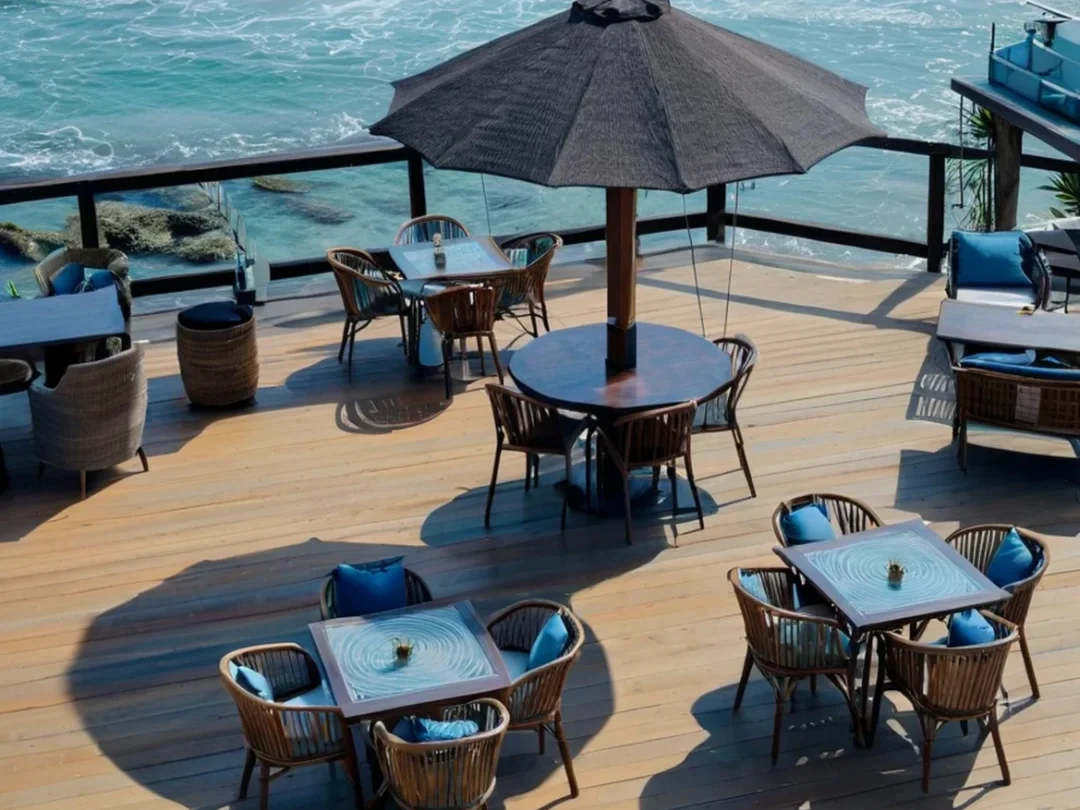
Based on Konma’s years of customer service experience, we have sorted out several frequently asked questions by catering operators, accurately answering everyone’s doubts in the purchase and use process, helping everyone avoid detours.
Q: What is the difference between powder coating and ordinary baking paint? Why does Konma recommend aluminum alloy furniture with powder coating?
A: The core difference lies in adhesion and coating thickness, and powder coating is far more durable than ordinary baking paint. Ordinary baking paint is formed by spraying and natural drying, with a thin coating and weak adhesion. It is easy to fall off and peel off in a salt spray environment, leading to metal rust. Powder coating is formed by electrostatic adsorption and then cured at 200℃. The coating is thicker and more uniform, with strong adhesion, and meets the ISO 9227 Neutral Salt Spray Test (NSS) standard. It can firmly wrap the metal surface, isolating salt spray and UV rays. Even if placed by the sea for a long time, it will not fall off or rust, making it more suitable for coastal scenarios.
Q: How often should outdoor furniture in coastal restaurants be rinsed with fresh water? Is there any difference in maintenance between different materials?
A: The optimal frequency is to simply rinse with fresh water once a week, and the main difference in maintenance between different materials lies in additional care. Overall, weekly rinsing can wash off the attached sea salt particles and delay aging; aluminum alloy furniture only needs simple rinsing without additional maintenance; teak furniture needs to be coated with special oil once every 3 months to better maintain its texture and durability; polywood furniture does not require regular maintenance, only cleaning the surface dust, which is very worry-free.
Q: When purchasing outdoor restaurant furniture in bulk, how to ensure that the material and quality meet the needs of coastal scenarios?
A: The core is to choose an experienced manufacturer + verify the test report + sample testing, all three are indispensable. First, choose a furniture manufacturer with rich experience in coastal scenarios, such as Konma, which has focused on outdoor furniture manufacturing for many years and has mature solutions for material adaptation in coastal environments. Second, check the material test report to confirm the salt spray and UV resistance of the material (for example, the aluminum alloy powder coating must meet the ISO 9227 standard, and the fabric must reach the AATCC 16 standard). Finally, you can ask for sample testing, place the sample in an outdoor sun exposure and salt spray environment, observe its aging, and purchase in bulk only after ensuring the quality meets the standards.
Q: Can Konma’s outdoor restaurant furniture adapt to the different coastal climate differences between Dubai and Miami?
A: Yes, Konma has optimized materials and craftsmanship according to the climate differences between the two places, which can be perfectly adapted. For the high-temperature sun exposure in Dubai, it has strengthened the UV resistance of materials and selected high-temperature resistant fabrics and base materials, ensuring that the fabric reaches Level 4 or above in the AATCC 16 Light Fastness Test, and the base material can resist high temperatures above 45℃. For the humid and rainy weather in Miami, it has focused on improving the moisture-proof and quick-drying performance of furniture. The quick-dry foam can drain water quickly to avoid mold, ensuring that outdoor restaurant furniture can be stable and durable in any coastal environment without frequent replacement.
In the final analysis, the choice of outdoor restaurant furniture in coastal cities is mainly about “adaptation” – adapting to salt spray, adapting to sun exposure, and adapting to the restaurant’s operational needs. With years of experience in furniture manufacturing, Konma comprehensively solves the aging pain points of outdoor furniture in coastal areas from material selection, process optimization to detail processing. Whether it is bulk purchase or customization needs, it can provide highly adaptable and durable solutions, allowing catering operators to no longer worry about frequent furniture replacement.
Banquet Hall Storage Headaches: What Makes Commercial S […]
Venue managers often pull hundreds of folding and stack […]
Selecting the right dining chairs can directly affect a […]
Why is the matching of sofas in themed Western restaura […]
Related links:
About us Company News Industry Dynamics Table Chair Outdoor-furniture Sofa Latest dining chair Other SSL 100% Secure Transactions