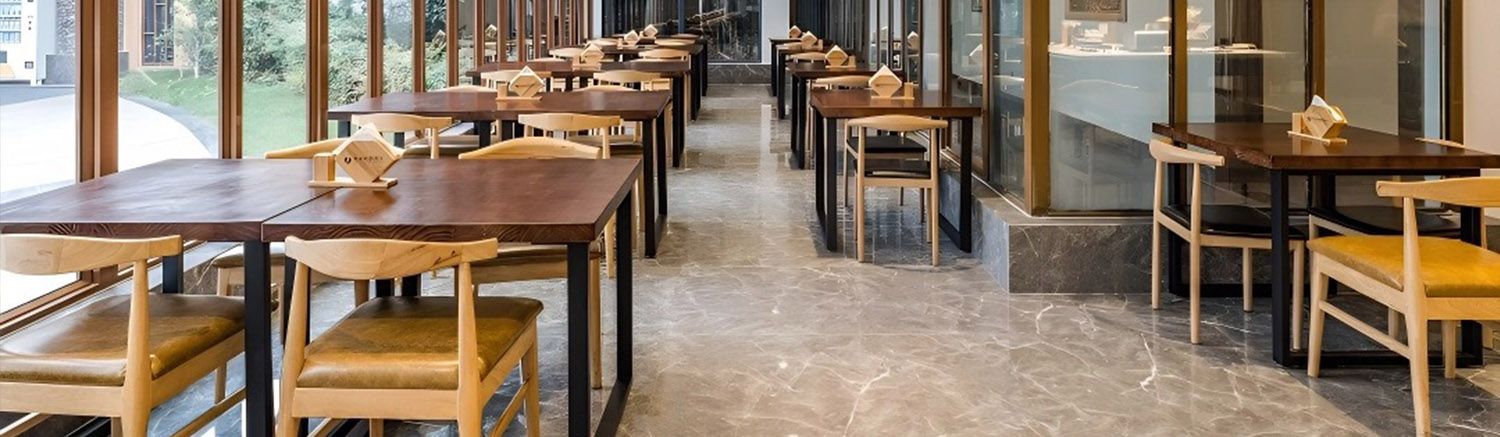
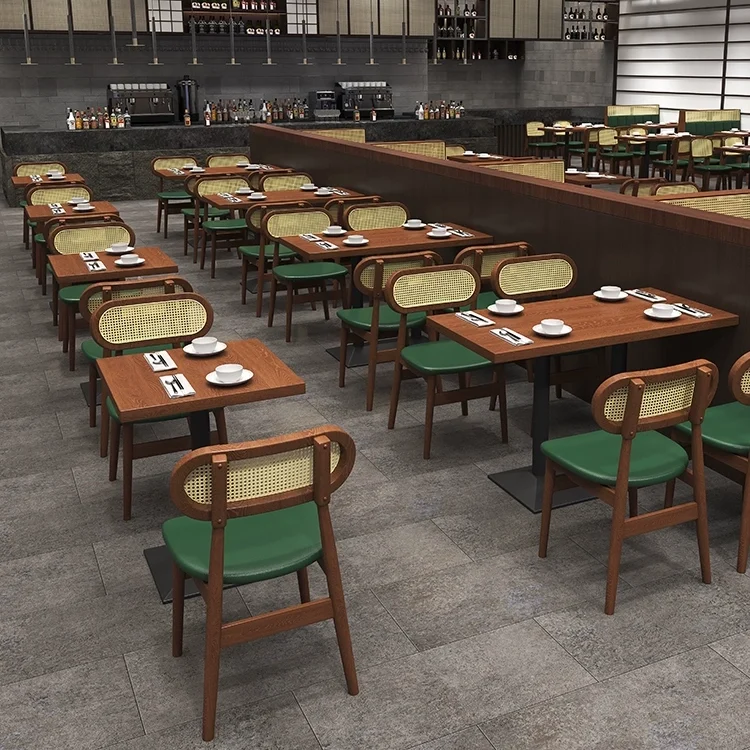
Sound-absorbing furniture is a core tool to solve noise problems in commercial catering spaces. With reasonable matching and scientific layout, it can effectively reduce restaurant noise by 30%, greatly improving customer dining experience and space quality. In a crowded restaurant, you are always surrounded by continuous conversations, clinking tableware and kitchen serving sounds. You have to raise your voice deliberately to chat quietly with your companions, which is a common problem in most catering spaces. Sound-absorbing furniture is the optimal solution that combines practicality, aesthetics and quantifiable effects.
The vicious cycle of noise in restaurants is essentially the typical cocktail party effect in acoustics. Hard floor tiles, glass walls and metal dining tables cause continuous sound reflection and superposition. Everyone is forced to raise their voice to hear the conversation clearly, which eventually makes the noise value of the whole space rise continuously. This not only affects the dining mood but also reduces the overall satisfaction of customers and even shortens their staying time. Ordinary soft decorations only play a weak decorative role, while professional sound-absorbing furniture can actively absorb sound waves in the human voice frequency band relying on material mechanics and structural design, cutting off the noise transmission path from the source and achieving quantifiable noise reduction effects.
The Noise Reduction Coefficient (NRC) is the core indicator to measure the effect of sound-absorbing furniture, ranging from 0 to 1. The higher the value, the better the sound absorption effect. Professional sound-absorbing furniture for commercial catering scenarios needs to stably achieve an NRC value of more than 0.7, and some high-end sound-absorbing soft-packed booths for restaurants can even exceed 0.85, meaning more than 80% of environmental noise can be effectively absorbed, far superior to the sound absorption performance of ordinary fabric furniture. This is also the key premise to achieve the 30% noise reduction goal.
Different materials and fillings directly determine the actual effect and durability of sound-absorbing furniture. We sorted out the comparison data of common materials through actual tests to show the differences more intuitively, facilitating operators to select materials accurately:
| Material Type | Sound Absorption NRC Value | Service Life | Deformation Resistance | Suitable for Catering Scenarios | Oil Stain Resistance Level |
|---|---|---|---|---|---|
| High-Density Acoustic Cotton | 0.75-0.88 | 5-8 years | Extremely Strong | Long-term commercial sound-absorbing booths, acoustic dining chairs | Meets AATCC 130 Standard |
| Polyester Fiber Acoustic Cotton | 0.65-0.72 | 3-5 years | Strong | Soft decoration for medium-sized restaurants | Meets AATCC 130 Standard |
| Ordinary Sponge | 0.30-0.45 | 1-2 years | Weak | Temporary display, non-commercial spaces | Does Not Meet Commercial Standards |
High-back sound-absorbing booth is the core product for optimizing the restaurant acoustic environment. With its raised backrest and integrated soft-packed structure, it forms a miniature physical sound insulation barrier, which can not only separate the sound transmission of adjacent dining areas but also avoid linear reflection of sound in empty spaces. With a reasonable layout, the noise reduction effect will be further amplified, easily achieving the 30% noise reduction goal:
For restaurant operators, the biggest enemy of sound-absorbing furniture is never noise, but the inevitable oil fumes and stains in catering scenarios——this is also the core reason why many people hesitate to choose fabric sound-absorbing furniture. In fact, professional commercial sound-absorbing furniture has long solved this pain point. Taking Konma’s products as an example, our fabrics have passed the AATCC 130 (Oil Stain Resistance Test) standard. Even in high-oil fume environments such as hot pot restaurants, because the fabric fibers are treated with fluorocarbon resin, oil droplets will roll off in beads (lotus leaf effect), preventing oil from seeping into the acoustic cotton and causing mold or odor. It can be kept clean with a damp cloth gently wiped daily, greatly reducing maintenance costs.
In addition to oil stain problems, operators also have various practical concerns when choosing sound-absorbing furniture. We have sorted out the most common questions and answered them one by one:
1. Do small shops with only 100 square meters need acoustic design?
Of course. Small shops have compact spaces, so sound reflection is more concentrated, and noise problems will be more obvious than large shops. There is no need to replace the whole house. Just place 2-4 sets of **high-density sound-absorbing cotton furniture** in the core dining area, and 1-2 sets of **sound-absorbing soft-packed booths**, which can significantly reduce noise reflection, achieve about 30% noise reduction effect, and improve customer experience without spending too much cost.
2. Can the fabric of sound-absorbing furniture adapt to different decoration styles?
Absolutely. Konma can provide customized fabrics with a variety of colors and materials. From simple light luxury, retro industrial style to warm pastoral style, it can match the corresponding sound-absorbing soft-packed furniture, taking into account both acoustic effects and spatial aesthetics. It can not only solve noise problems but also not damage the original decoration style of the restaurant.
3. Will the noise reduction effect of sound-absorbing furniture attenuate after long-term high-frequency use?
Furniture filled with high-density acoustic cotton has an extremely slow attenuation rate of sound absorption performance, and can maintain a stable NRC value for more than 5 years under normal use, much higher than ordinary sponge furniture. Coupled with Konma’s fabric protection technology, even if used in a high-oil fume environment for a long time, the noise reduction effect will not be affected by fabric aging or damp acoustic cotton, and the durability is fully suitable for commercial high-frequency use needs.
4. Can I see the noise reduction effect quickly after matching sound-absorbing furniture?
Yes. After scientific layout, you can feel the obvious noise change on the same day. Customers do not need to raise their voices deliberately when talking, and the sound of tableware collision and environmental noise will be effectively weakened. Most restaurants can stably achieve the 30% noise reduction goal within 1-2 weeks after matching Konma’s **sound-absorbing furniture**, and the average customer staying time is extended by 20%, indirectly driving the consumption of additional categories such as desserts and drinks.
Konma focuses on the R&D and customization of catering furniture. Aiming at the acoustic pain points and hygiene needs of various catering spaces, we create exclusive series of products such as sound-absorbing soft-packed booths for restaurants, acoustic fabric dining chairs, and sound-absorbing soft-packed screens. All sound-absorbing furniture adopts acoustic materials meeting commercial standards with qualified NRC coefficients, and the fabrics pass the AATCC 130 oil stain resistance test. It also supports personalized customization of size, fabric and structure, which can be perfectly adapted to different scenes such as hot pot restaurants, western restaurants, casual bars and buffet restaurants.
For commercial catering spaces, noise control is never an “extra bonus”, but a “compulsory course” to enhance core competitiveness. Through professional sound-absorbing furniture matching scientific layout design, it can not only achieve the quantifiable noise reduction goal of 30% but also solve core pain points such as oil fumes and maintenance, allowing customers to enjoy dining in a comfortable and quiet environment, thereby improving satisfaction and repurchase rate——this is also the core original intention of Konma to create commercial sound-absorbing furniture, using professional products to help catering operators solve acoustic problems and achieve long-term profitability.
In 2026, outdoor leisure areas of hotels and rooftop ba […]
Walk into any upscale cocktail lounge or whiskey bar, a […]
In high-end catering, hotel lobbies and other scenarios […]
If you own a restaurant, you know the truth. Furniture […]
Related links:
About us Company News Industry Dynamics Table Chair Outdoor-furniture Sofa Latest dining chair Other SSL 100% Secure Transactions