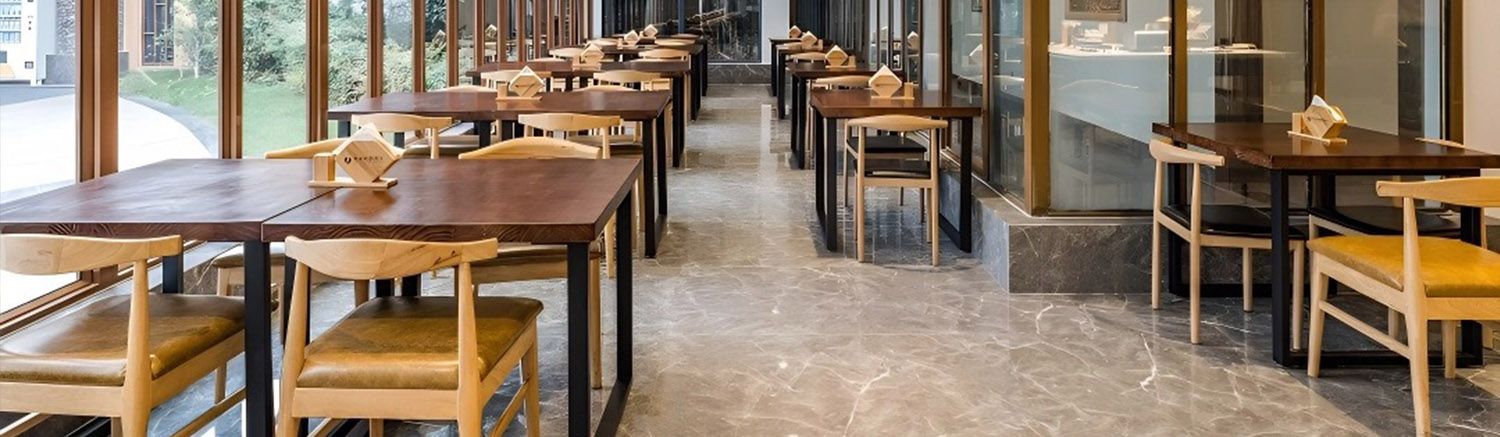
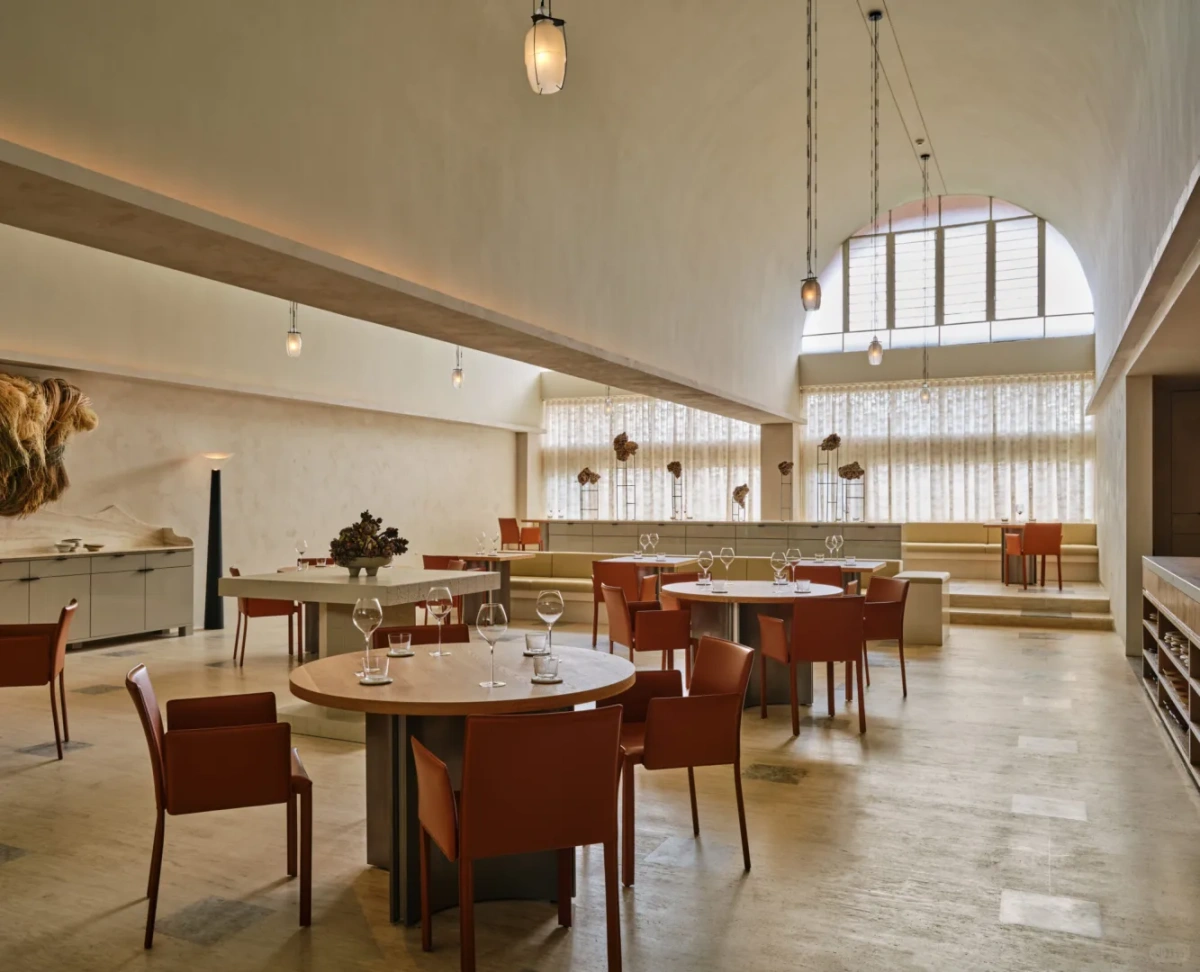
In catering spaces, a suddenly failed commercial dining chair will not only disrupt normal business operations but also trigger safety liability issues. A residential dining chair with 100kg load capacity is sufficient for daily use, while a commercial dining chair for high-frequency and high-intensity commercial scenarios must cross the 200kg+ load test threshold, which is also the core quality bottom line that Konma always adheres to in the research and development and production of high-load-bearing restaurant dining chairs. Many professional buyers only focus on appearance and price when selecting seats, but ignore core indicators such as static pressure load capacity and fatigue durability that determine product service life. As everyone knows, a qualified fatigue test qualified commercial dining chair is the basic guarantee for the stable operation of commercial spaces.
The static load test is by no means simply “placing heavy objects”, but a core indicator to measure the safety level of commercial dining chairs, and even the “life-or-death line” for restaurants to avoid safety risks. Once the static load capacity is not up to standard, the seat will be deformed or loose at best, or even break and collapse at worst, causing personal injury and business disputes. For commercial scenarios with high turnover and large passenger flow, commercial dining chairs have to bear the pressure of users of different weights every day, and even multiple people may sit temporarily. The 200kg static load standard is formulated based on risk prediction of real commercial scenarios.
According to the latest industry standards, the static load test requires evenly applying a 200kg-320kg sandbag static pressure load to the center of the seat surface for more than 10 minutes, monitoring the seat surface deformation, frame deformation and connector looseness throughout the process. The qualification standard is no structural fracture and deformation not exceeding 1.5mm. When producing 200kg load-bearing restaurant chairs, Konma takes the initiative to raise the static test standard to 280kg, far exceeding the basic commercial requirements. Even under long-term heavy pressure, it can maintain structural stability and avoid safety hazards from the source.
More importantly, the static load capacity is directly related to the durability of the seat. Many inferior commercial dining chairs seem to be able to bear short-term heavy pressure, but due to material and process defects, metal fatigue occurs after repeated static pressure, and the load capacity is gradually lost. However, Konma ensures that each commercial thickened metal dining chair can bear weight stably for a long time through strict static tests, adapting to the high-intensity use needs of commercial scenarios.
If the static load test is the “final assessment”, then the pipe wall thickness is the “innate gene” of the load capacity of commercial dining chairs. Many buyers are easy to fall into the misunderstanding of “the thinner the wall thickness, the lighter the weight”, but ignore the core needs of commercial scenarios – durability and safety. A wall thickness of more than 1.5mm is not only a mandatory threshold to distinguish between residential and commercial seats, but also the core foundation for Konma to create high-load-bearing commercial dining chairs.
The steel pipe wall thickness of civil dining chairs is mostly 0.8mm-1.0mm, which can only meet the low-frequency daily use of families and cannot bear the high-frequency heavy pressure of commercial scenarios. Dining chairs for chain catering need to use 1.5mm-2.2mm thickened pipes. At the key stressed chair legs, Konma even upgrades to 2.2mm wall thickness. Combined with high-strength carbon steel or 6061-T6 aviation-grade aluminum alloy materials, the load capacity upper limit and durability are improved from the base material level.
In addition to the wall thickness, the material purity and processing technology of the pipe wall are also crucial. The high-strength pipes selected by Konma go through multiple pre-treatment processes such as rust removal and annealing to avoid load-bearing weaknesses caused by material impurities. At the same time, through precision rolling technology, the uniformity of the pipe wall thickness is ensured, avoiding uneven stress caused by local uneven thickness. The following table details the performance differences of commercial dining chairs corresponding to different wall thicknesses and processes, adding a failure risk item to clearly show the correlation between material technology and safety:
| Specification/Indicator | Home Grade | Konma Contract Grade | Failure Risk |
|---|---|---|---|
| Pipe Wall Thickness | 0.8mm – 1.0mm | 1.5mm – 2.2mm | Too thin is prone to metal fatigue and collapse |
| Welding Point Treatment | Spot Welding/Partial Welding | 360° Full Welding | Weld cracking leads to complete chair disintegration accident |
| Static Load | 100kg | 200kg – 280kg | Insufficient load capacity leads to backbone bending and fracture |
| Cycle Times | 10,000 – 20,000 times | 120,000 times (BIFMA Exceeding Standard) | Long-term high-frequency turnover leads to loose connections and abnormal noise |
In addition to the wall thickness, Konma has also made multiple optimizations in the structural design of commercial dining chairs: install X-shaped cross braces and double-layer reinforced beams at the bottom of the seat, embed L-shaped reinforced angle codes at the connection between the chair body and the seat frame, and add vertical reinforcing ribs to some large-size commercial dining chairs to disperse single-point stress to the entire frame, further improving load-bearing stability and reducing failure risks from the structural level.
When purchasing commercial dining chairs, many suppliers will present test reports of “300kg load capacity” and “qualified fatigue test”, but rarely inform the test standards. The severity of different test standards varies greatly. The gap between ordinary testing and BIFMA standards is the “disaster area” of false load capacity reports, and also the key to avoiding pitfalls that professional buyers must master.
The ANSI/BIFMA X5.1-2017 standard formulated by BIFMA (Business and Institutional Furniture Manufacturers Association) is a globally recognized benchmark for commercial seat safety testing, and its test process and judgment standards are far higher than ordinary testing. Ordinary testing mostly only conducts simple static load tests with short test time and loose judgment standards, and even can “forge” qualified reports by temporary reinforcement, reducing test time and other methods. The BIFMA standard requires full-process testing from multiple dimensions such as static load, dynamic fatigue, lateral load, and connector durability, with more stringent test parameters. For example, the dynamic fatigue test requires more than 100,000 cycles, far exceeding the 10,000-20,000 cycles of ordinary testing.
The BIFMA standard commercial dining chairs produced by Konma are tested in accordance with the ANSI/BIFMA X5.1-2017 standard throughout the whole process. Each batch of products will obtain test reports issued by third-party institutions such as SGS and TUV. The reports will clearly mark the test parameters, test process and judgment results without any vague expressions. The following are the core differences between BIFMA standards and ordinary testing to help buyers quickly spot false reports:
| Test Item | Ordinary Testing Standard | BIFMA Standard (ANSI/BIFMA X5.1-2017) | Failure Risk |
|---|---|---|---|
| Dynamic Fatigue Test | 10,000 – 20,000 cycles, no clear deformation requirements | More than 100,000 cycles, no frame looseness or weld cracking | Products qualified by ordinary testing are prone to short-term loosening and fracture |
| Static Load Test | 100-150kg, test time 1-3 minutes | More than 200kg, test time 10 minutes, deformation ≤1.5mm | The actual load capacity of products with false reports is far lower than the marked value |
| Connector Test | No special test, only visual inspection for no looseness | Repeated disassembly and assembly more than 50 times, no looseness or wear | Loose connectors lead to seat shaking and safety hazards |
The core of identifying false load capacity reports is “looking at standards, looking at details”: first, ask suppliers to provide third-party test reports marked with BIFMA standards and reject “self-made reports”; second, check the test parameters in the report, focusing on the static load test time and dynamic fatigue cycle times; third, ask for on-site sampling tests, place 200kg heavy objects on the seat surface for 3 minutes, observe whether there is obvious deformation or abnormal noise, and intuitively verify the load capacity. Konma always makes the test reports of each batch of commercial dining chairs public, supports on-site sampling tests, and breaks the misunderstanding of false load capacity with actual data.
For business scenarios that require batch configuration of seats, choosing high-load-bearing restaurant dining chairs that pass strict tests may seem to have a higher initial investment, but can actually greatly reduce long-term operating costs. This is also the core logic of TCO (Total Cost of Ownership) – the durability of high-quality commercial dining chairs can greatly reduce the replacement frequency, reduce labor and material costs, and avoid additional expenses caused by safety disputes.
Frequent replacement of inferior seats will not only consume manpower and material resources, but also affect business reputation due to product failures. The commercial dining chairs of Konma have a service life of 7-8 years due to their excellent load capacity and durability, which is 2-3 times that of ordinary commercial seats. Calculated, the average annual cost is even lower. At the same time, the Stackable Heavy-duty Chairs design of Konma can also save storage space, adapt to the layout needs of various catering spaces, and further improve space utilization and reduce operating costs.
More importantly, qualified commercial dining chairs can provide Hospitality Liability Protection for catering operators. Once a safety accident occurs due to seat quality problems, the qualified test report and high-quality product quality can help operators reduce liability risks, which is also one of the core reasons why professional buyers prefer high-load-bearing and high-standard commercial dining chairs.
Q1: Suppliers claim that their products can bear 300kg, how to verify the authenticity?
A: Do not judge only by oral description. The core is “look at standards, ask for reports, and do tests”. First, ask suppliers to provide ANSI/BIFMA X5.1-2017 standard test reports issued by third-party institutions such as SGS and TUV. The reports must clearly mark specific data such as static load capacity and fatigue test; second, ask for on-site sampling tests, place 200kg heavy objects evenly on the seat surface for 3 minutes, and observe whether there is obvious deformation or abnormal noise. Konma will provide complete test reports for each batch of 200kg load-bearing restaurant chairs, and can also support on-site sampling tests to ensure the data is true and reliable.
Q2: Can aluminum alloy commercial dining chairs meet the 200kg+ load capacity standard?
A: Absolutely. Many people mistakenly believe that aluminum alloy materials have insufficient load capacity, but the key lies in materials and processes. Konma adopts 6061-T6 high-strength extruded aluminum alloy, combined with 1.8mm-2.2mm thickened pipe wall and embedded steel pipe reinforcement process. While reducing the weight of the seat and facilitating handling and stacking, it can stably achieve static load capacity of more than 200kg, solving the industry pain point of insufficient load capacity of aluminum alloy seats and adapting to various commercial scenarios.
Q3: Will upholstered commercial dining chairs affect the load capacity and fatigue test results?
A: No. Upholstery is only the surface decoration of the seat, and the core load capacity depends on the metal frame. As long as the frame process and materials meet the standards, the upholstery design will not reduce the seat load capacity or affect the fatigue test results. Konma can customize high-load-bearing commercial dining chairs with upholstered and solid wood seat surfaces, balancing aesthetics and practicality, and adapting to catering spaces of different decoration styles.
Q4: Will long-term use scenarios with humidity or large temperature differences affect the load capacity of commercial dining chairs?
A: No. Konma’s commercial thickened metal dining chairs are fully treated with rust prevention and deformation resistance. The pipe surface adopts electrostatic spraying process, and the frame is cured at high temperature, which can adapt to different environments such as humidity and large temperature differences. The load capacity will not attenuate due to environmental factors during long-term use, and there will be no rust, deformation and other problems.
In the research and development and production of commercial seats, Konma always takes load test and fatigue durability as the core research and development direction. From material selection to production process, the whole process is aligned with the ANSI/BIFMA X5.1-2017 standard to create commercial dining chairs suitable for high-intensity use scenarios. We firmly believe that only products that can withstand extreme tests can provide lasting safety guarantee for various commercial spaces, and also bring more cost-effective long-term use experience for buyers, reduce TCO (Total Cost of Ownership), and avoid catering industry liability risks.
Restaurants transformed from old buildings carry a uniq […]
The brand new bar outdoor chairs you just installed for […]
The competition in the catering industry in 2026 has lo […]
For restaurant operators, standardized booth sofas ofte […]
Related links:
About us Company News Industry Dynamics Table Chair Outdoor-furniture Sofa Latest dining chair Other SSL 100% Secure Transactions