Home / News / Industry Dynamics / Fabric, Faux Leather or Genuine Leather? A Commercial Upholstery Guide for Restaurant Seating
Fabric, Faux Leather or Genuine Leather? A Commercial Upholstery Guide for Restaurant Seating
2026-11-12
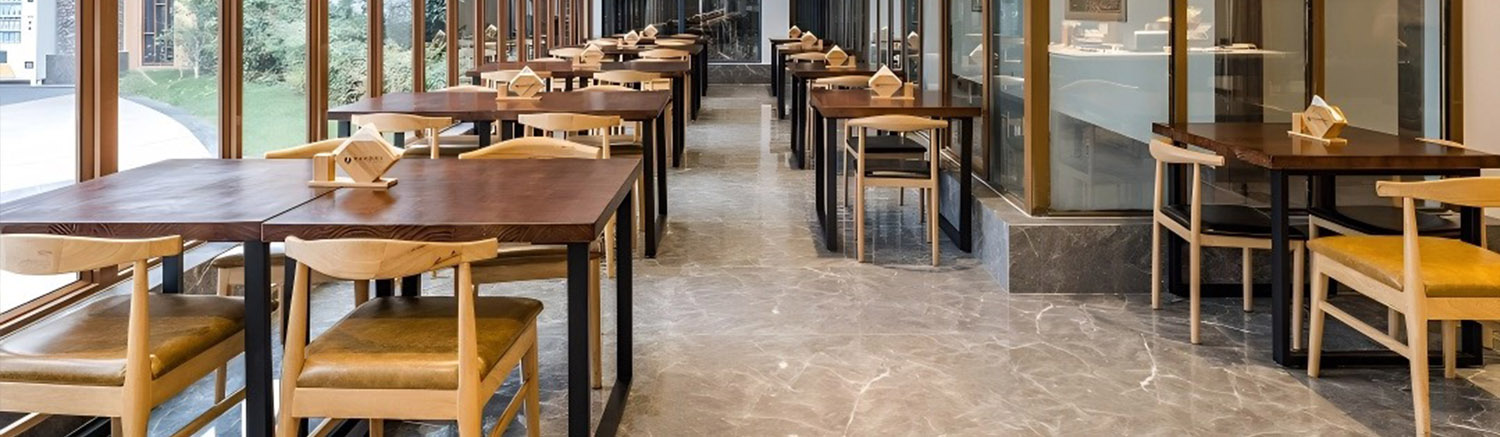
Ask an operator what a chair looks like and they will describe the frame. Ask them what a chair feels like in year three, and they are describing the cover. Upholstery is the part of restaurant seating that takes the daily punishment — bodies, food, cleaning chemicals, sunlight through a window — and it is also the line item most often chosen from a swatch book in five minutes at the end of a project meeting.
This guide is about commercial upholstery for restaurant seating: what the three main families actually do in service, which numbers matter when a supplier quotes a fabric, and how to match the cover to the way your room is used.
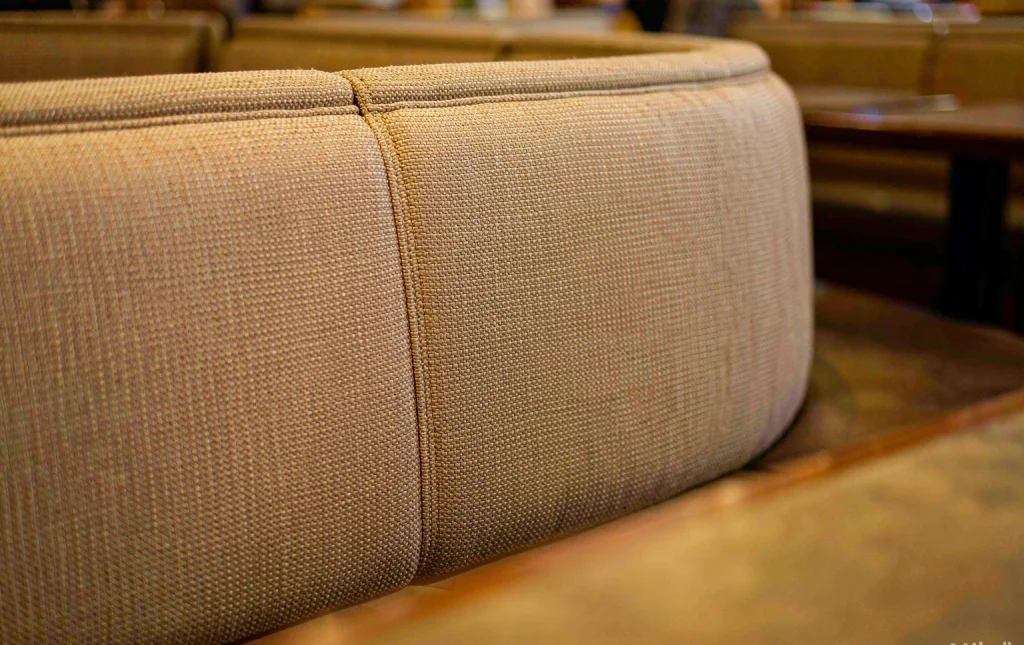
Weave density, seam construction and piping show up long before the colour does.
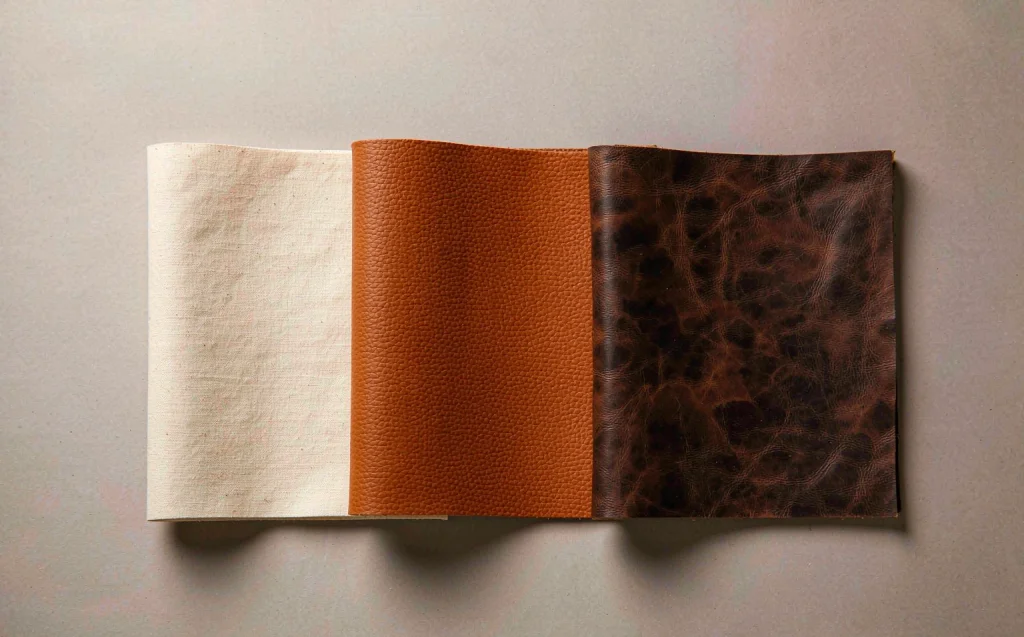
The Three Upholstery Families at a Glance
Criterion
Woven fabric
Faux leather (PU / PVC)
Genuine leather
Breathability / comfort
High — stays cool
Low — warm, can feel sticky
Medium — softens with use
Liquid spills
Absorbs if untreated; needs prompt action
Wipes clean easily
Wipes clean; may darken temporarily
Visible wear after 3 years
Pilling, fading, flattening
Cracking or peeling at seams
Patina, colour shift — reads as character
Repairability
Panel replacement; stains rarely removable
Peeling cannot be repaired, only replaced
Scratches can be conditioned/refinished
Relative cost
Low–medium
Low–medium
High
Best fit
Dining rooms, booths, banquettes
High-turnover, food-heavy formats
Premium and lounge areas
Same colour family, three different lifecycles — the swatch book will not tell you which is which.
Woven Fabric: Which Weaves Survive a Dining Room
Look at the weave, not the pattern
A tight, high-density weave resists abrasion because the yarns cannot be pulled apart; a loose decorative weave looks wonderful in a sample and snags on a watch strap in service. Chenille and bouclé read as premium and hold up reasonably well in low-turnover rooms, but they trap crumbs and show every mark. Tight plain weaves and microfibre blends are the boring, dependable choice for a room that runs 200 covers a night.
Rub counts are a floor, not a guarantee
Suppliers quote either Martindale (cycles) or Wyzenbeek (double rubs). The numbers to know in commercial settings:
Under 20,000 Martindale: decorative or residential. Do not specify for dining seating.
20,000–30,000: acceptable for light commercial use such as hotel rooms.
30,000–40,000: the practical working range for restaurant chairs and booths.
40,000+: heavy contract, transport and public seating.
One caution: rub count measures abrasion only. It says nothing about staining, fading, or seam slippage — so a 50,000-rub fabric can still look tired in a year if the colour is unstable in sunlight.
Stain treatments cut both ways
Fluorocarbon and similar treatments make spills bead up, which buys your staff the minutes they need. They also wear off with cleaning, and they can make a fabric harder to re-clean in patches. Treat the finish as a maintenance buffer, not a permanent property, and ask whether it can be reapplied.
Faux Leather: Where It Works, and Why It Peels
PU and PVC are not the same product
PVC is denser, cheaper and more plasticky; PU is softer, more breathable and closer to leather in hand. Both are a film bonded to a backing cloth, which is precisely why both eventually fail at the same place: the bond.
Hydrolysis is the real failure mode
In humid climates and in rooms that get steam-cleaned, moisture attacks the bond between the coating and the backing. The surface lifts, then peels in sheets along the seam — usually starting where bodies press hardest: seat fronts and backrest edges. A “leather” banquette that peels after eighteen months is almost never a wear problem; it is a specification problem.
When to pay for it anyway
Faux leather is the right answer where liquid volume is the dominant risk: hot pot, barbecue, fast-casual burger formats, family dining with small children. Nothing wipes down faster, and the cost per seat is low enough that a partial replacement in year four is a budgeted event rather than a crisis. For a curved banquette in a sauce-heavy concept, it is often the honest choice — see how it is used in our orange faux leather banquette with solid wood frame.
Genuine Leather: The Long Game
Aniline versus pigmented
Aniline leather is dyed through with no surface coating. It feels exceptional and shows every scratch and ring mark — a poor fit for dining. Pigmented (coated) leather has a protective finish that resists staining and wipes clean, and it is what commercial seating should use.
What you are buying is repairability
The case for leather is not that it never wears; it is that wear can be managed. Scratches take a conditioner, scuffs can be touched in, and the surface develops a patina that guests read as quality rather than damage. That matters most in lounge and bar areas where the seating is part of the brand statement — the same reasoning behind the warm metals and premium finishes in our 2026 restaurant design trends piece.
Cleaning Codes, Translated for Your Staff
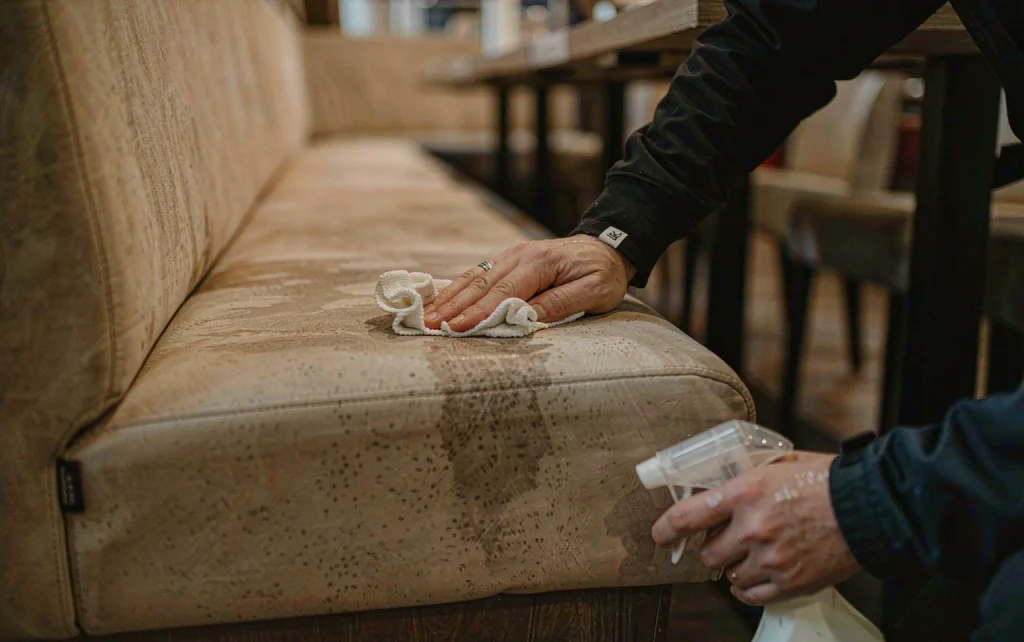
Fabric suppliers print a code on the back of the sample. Most operators never translate it into an instruction, which is how a water-based cleaner ends up on a solvent-only fabric.
Code
Means
What staff can safely do
W
Water-based cleaner only
Diluted neutral detergent, blot, air dry
S
Solvent-based cleaner only
Dry-cleaning solvent; no water — it can ring the fabric
WS
Either water or solvent
Water-based first; solvent for oily marks
X
Vacuum only, no liquid
Brush or vacuum; send to specialist cleaning
A ten-minute cleaning brief at handover prevents most of the damage that shows up in year two.
Matching Upholstery to Your Service Model
Format
Recommended cover
Why
Fine dining
Pigmented leather, or 35,000+ rub woven
Long dwell, low spill risk, look carries the brand
Fast casual / QSR
PU faux leather, moulded seats
Fast wipe-down between covers
Hot pot / BBQ / family
PU, sealed seams, dark colours
Oil and sauce volume is the dominant risk
Café / all-day
Tight woven, stain-treated, mid-tone
Comfort for long stays, hides coffee marks
Hotel lobby / lounge
Leather or bouclé in low-traffic zones
Texture reads premium in photos
Outdoor terrace
Solution-dyed acrylic only
UV stability cannot be substituted
Questions to Ask Before You Approve a Swatch
What is the rub count, and by which test method?
What is the cleaning code, and can my staff actually follow it?
Is the colour solution-dyed, or surface-applied?
For faux leather: what backing cloth, and is it rated for humid interiors?
Can I re-order the same article number in two years, or is it a seasonal line?
What does the seam look like — single stitch, double stitch, or piping — and can it be re-covered without replacing the frame?
That last question matters more than it sounds. Re-covering a booth is a fraction of replacing it, which is why the frame and the cover should be specified as separate decisions — the same principle behind the five-year TCO framework we use with clients.
Frequently Asked Questions
Which lasts longer in a restaurant, fabric or faux leather?
In a wet, food-heavy format, faux leather typically outlives fabric because it wipes clean; in a dry, low-spill room, a 35,000-rub woven fabric often lasts longer and looks better at year three. The deciding factor is not the material family but the failure mode your service style actually triggers.
Why does PU leather peel after a year or two?
Hydrolysis. Moisture attacks the bond between the coating and the backing cloth, usually on seat fronts and backrest edges. It accelerates in humid climates, with steam cleaning, and with low-grade backing materials — which is why the same-looking product can last two years or six.
Can I mix upholstery types in one dining room?
Yes, and it usually looks better — leather on banquettes, fabric on loose chairs. Keep the palette in the same family and the maintenance instructions separate, so staff know which seat takes water and which does not.
How often should booth upholstery be replaced?
Re-cover rather than replace: most banquette frames outlast two or three cover cycles. If the frame is sound, budget a re-cover every four to six years depending on traffic — and keep the article number on file so the colour can be matched.
Next Step
If you are choosing covers for a project, send us the floor plan and the service model rather than a colour. We can propose a cover specification per zone, quote it against the frame separately, and show you how it reads in a 3D layout before production. Start with our curved fabric banquette with gold metal accents, the commercial chair range, or the commercial sofa collection for lounge seating. Colour direction, if you are still deciding, is covered in our piece on restaurant seating colour psychology.
KONMA is a professional manufacturer of high-quality restaurant furniture, integrating independent R&D, production, sales, and service. With a skilled team, advanced equipment, and a global sales network, we provide customized furniture solutions for diverse dining environments including Asian, Western, fast-food, and café settings.
For over twenty years, we have adhered to the principles of quality and innovation, offering personalized designs, fine craftsmanship, and reliable service. Committed to continuous improvement, KONMA strives to become a leading brand in the catering furniture industry.
We warmly invite partners from all industries to collaborate for mutual success.

 English
 简体中文
 Español
 Français
 Deutsch
 Русский
 Português
 Italiano
 日本語
 한국어
 العربية
 Türkçe
 Tiếng Việt
 ไทย
 Indonesia
 Melayu